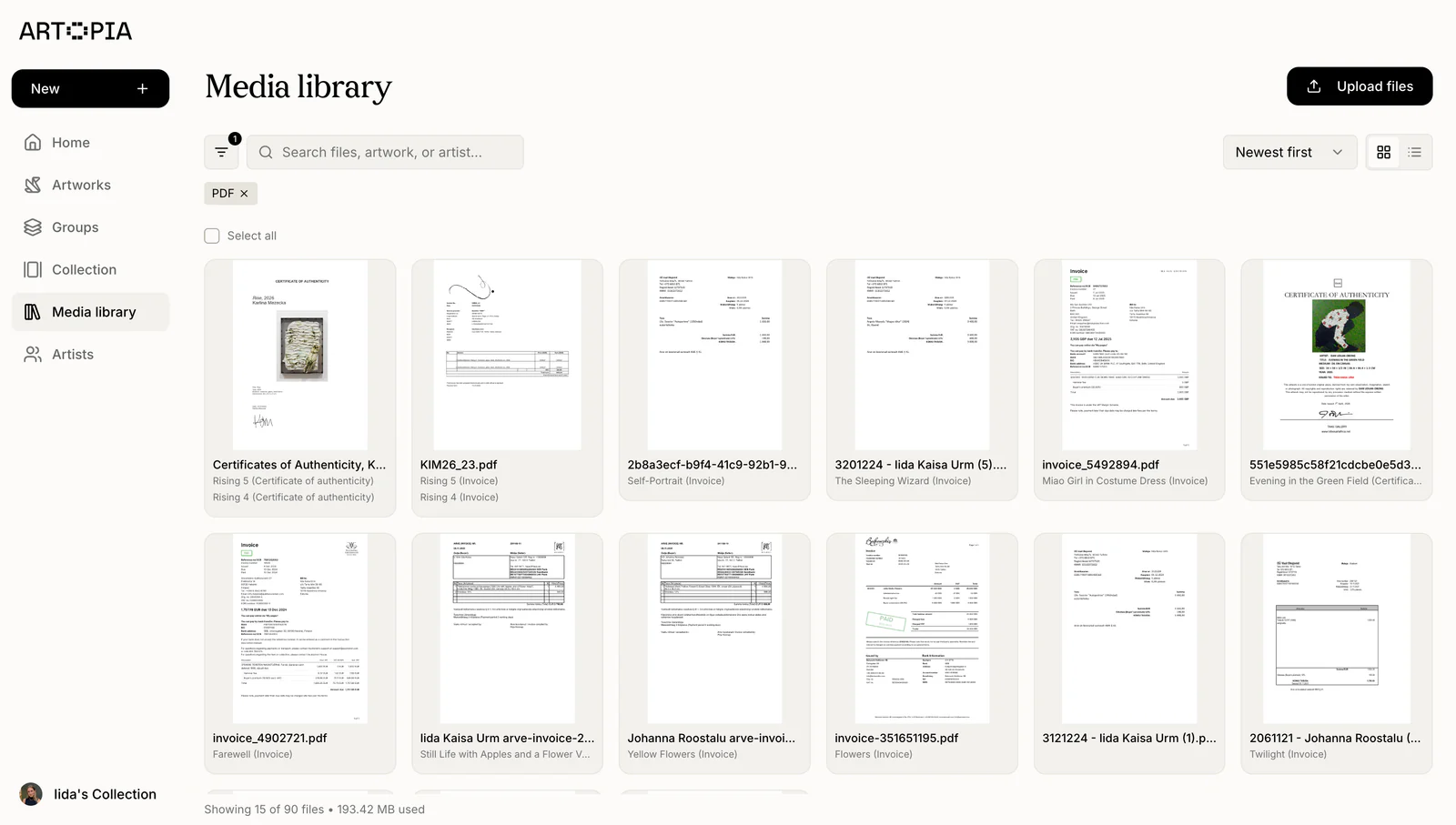
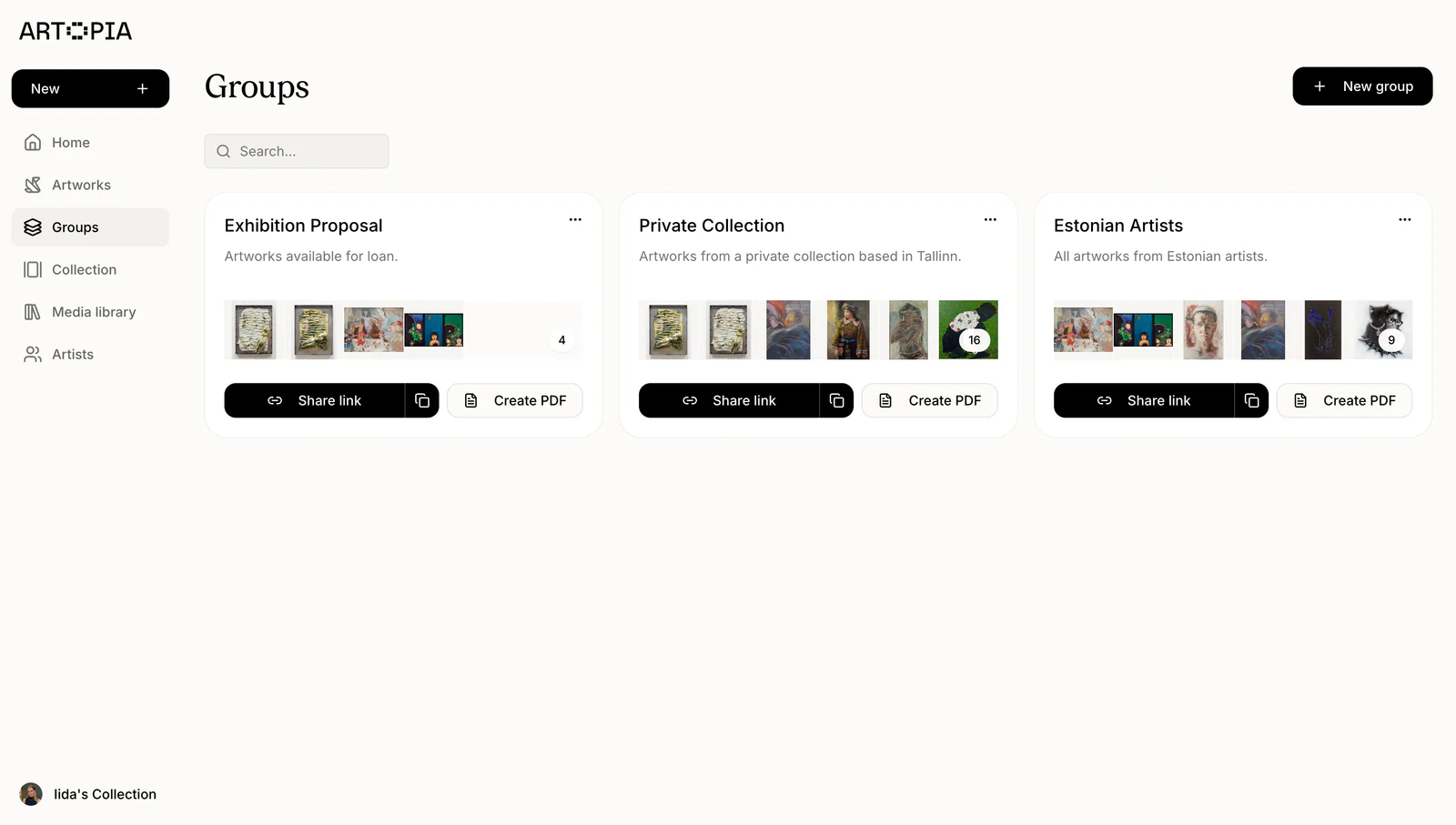
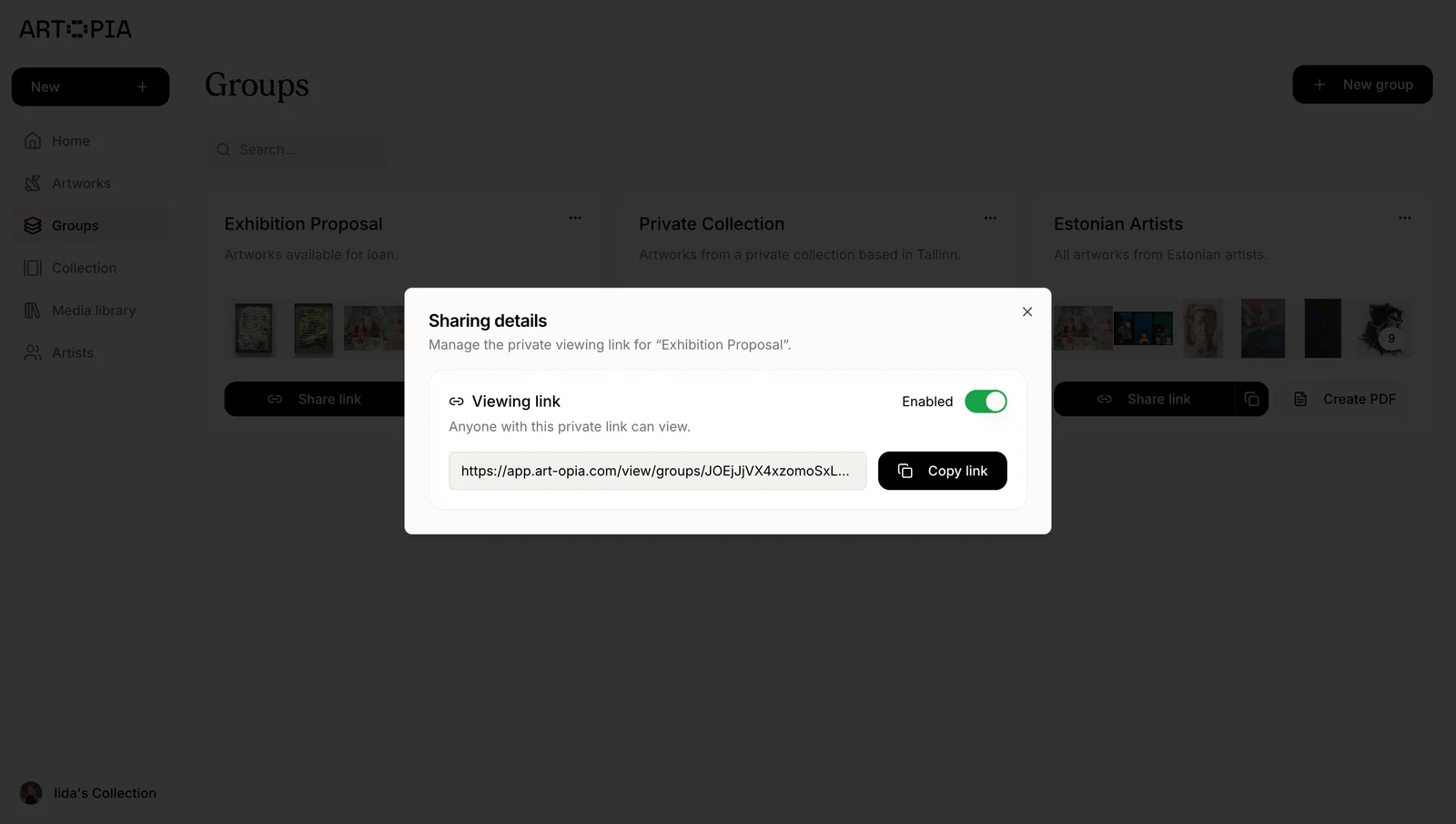
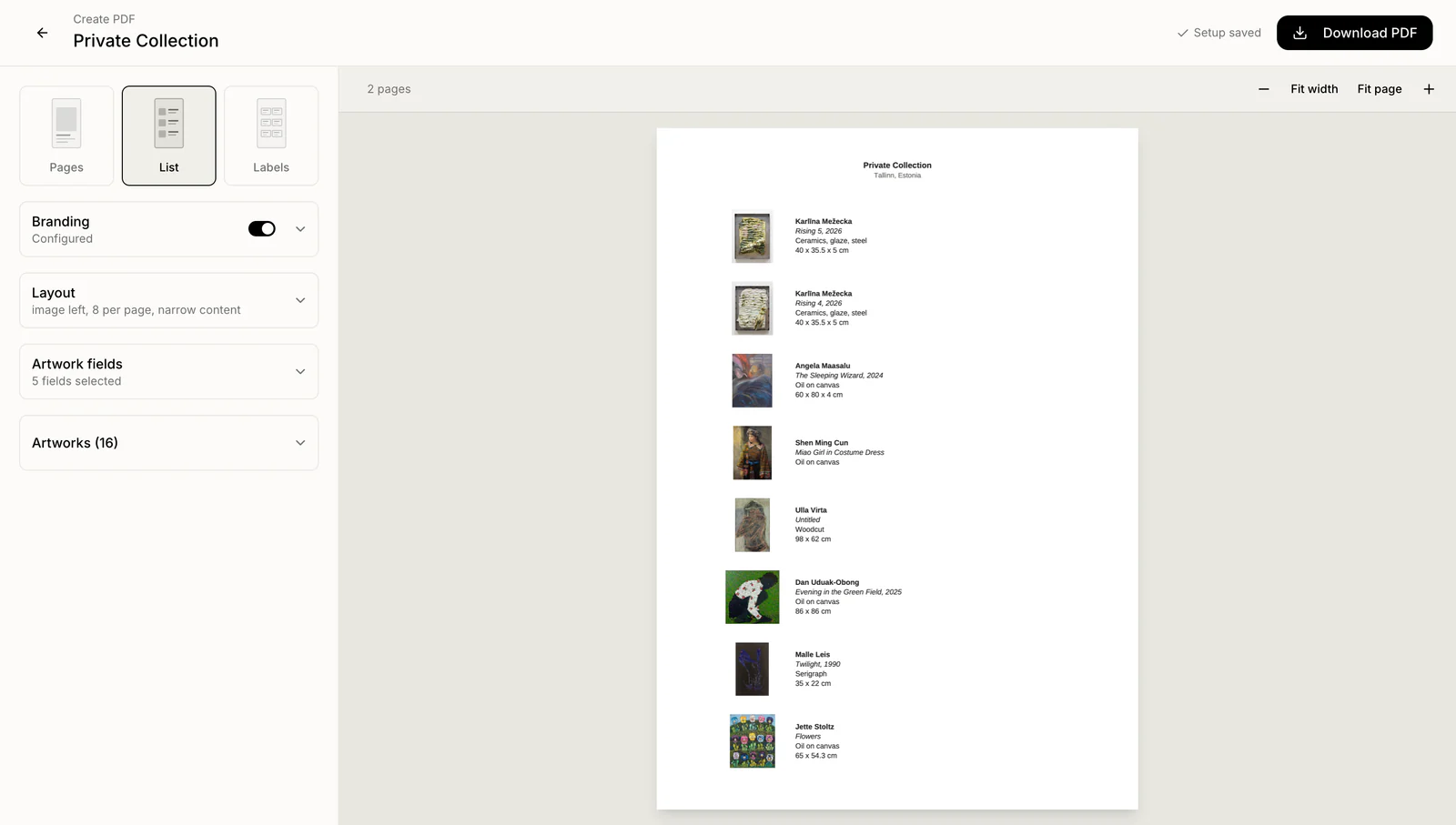
Standardise records across the organisation
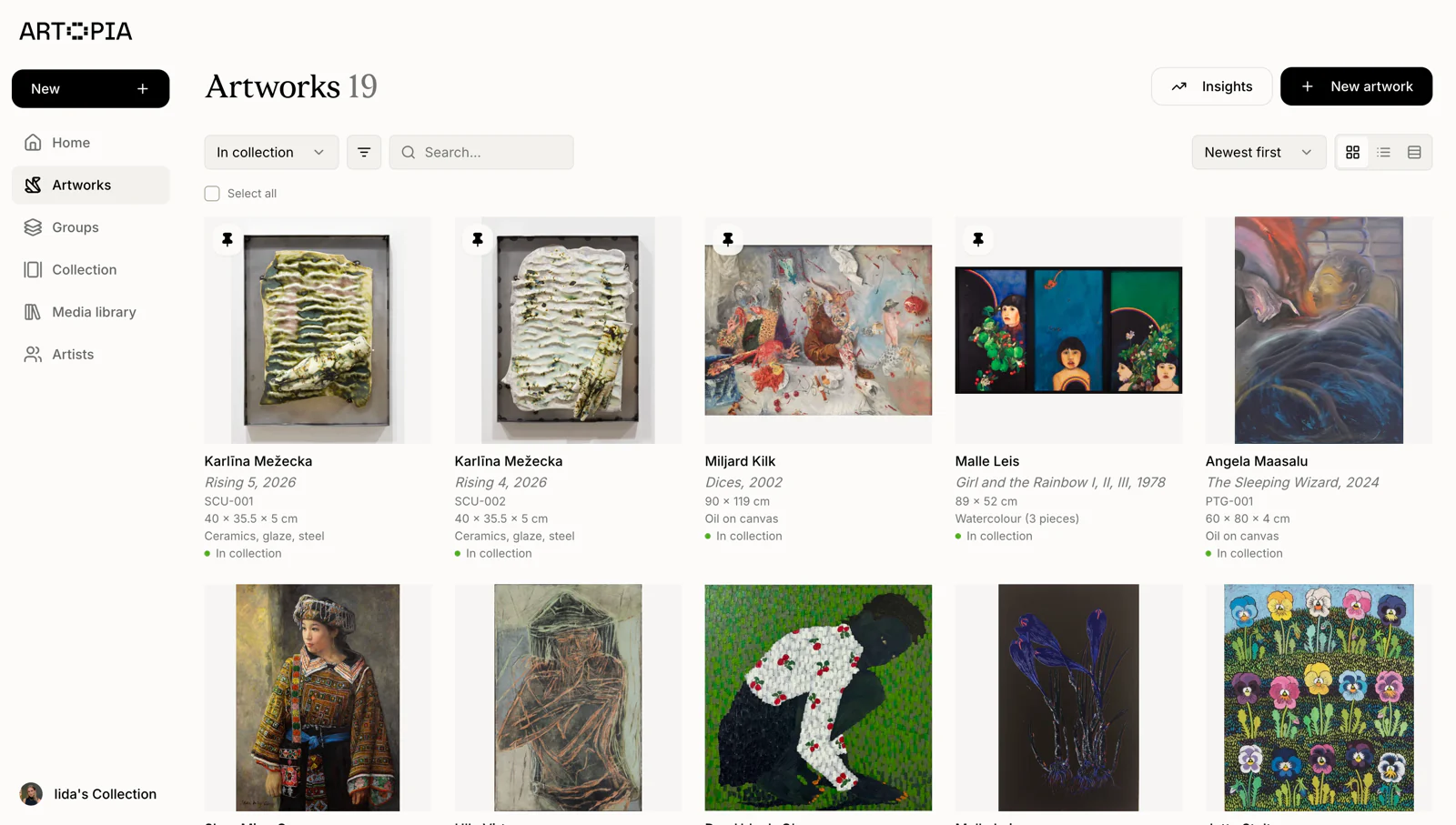
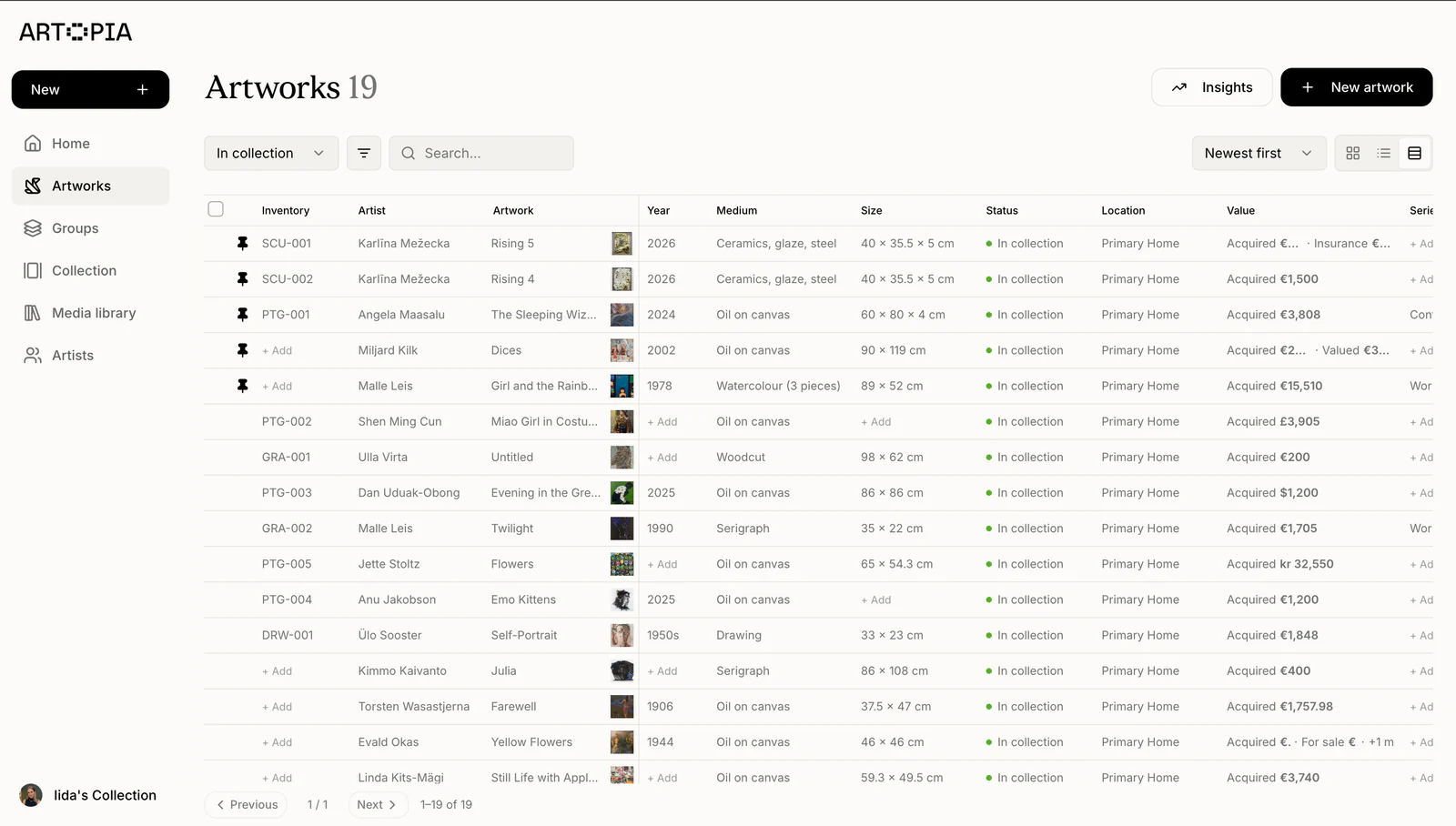
Use consistent fields and inventory numbers so staff can maintain reliable artwork records, with acquisition paperwork, photography, appraisals and supporting files attached to each work.
For institutions
Catalogue artworks, track locations and preserve collection records for foundations, museums, corporate collections and other institutions.
Start your collection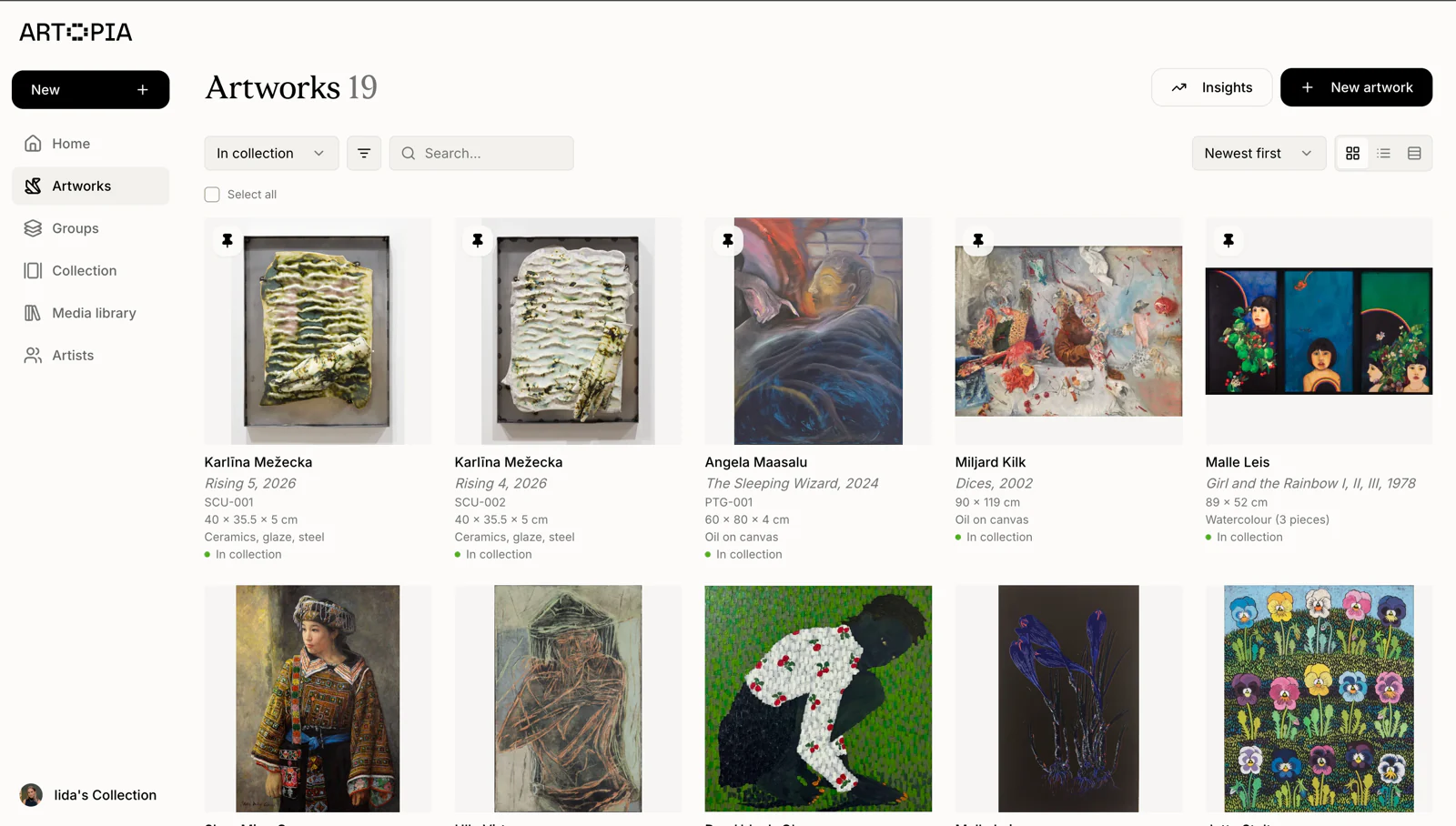
Use consistent fields and inventory numbers so staff can maintain reliable artwork records, with acquisition paperwork, photography, appraisals and supporting files attached to each work.
Keep the current location and status of every work clear, record dated condition assessments and retain the documentation needed for storage, display, loans and exhibitions.
Maintain provenance, ownership history and collection context in a shared catalogue, then produce consistent records and PDFs without rebuilding information for every request.
Shared catalogue
Keep consistent inventory data in one catalogue so knowledge stays with the organisation as responsibilities change.
Documentation & condition
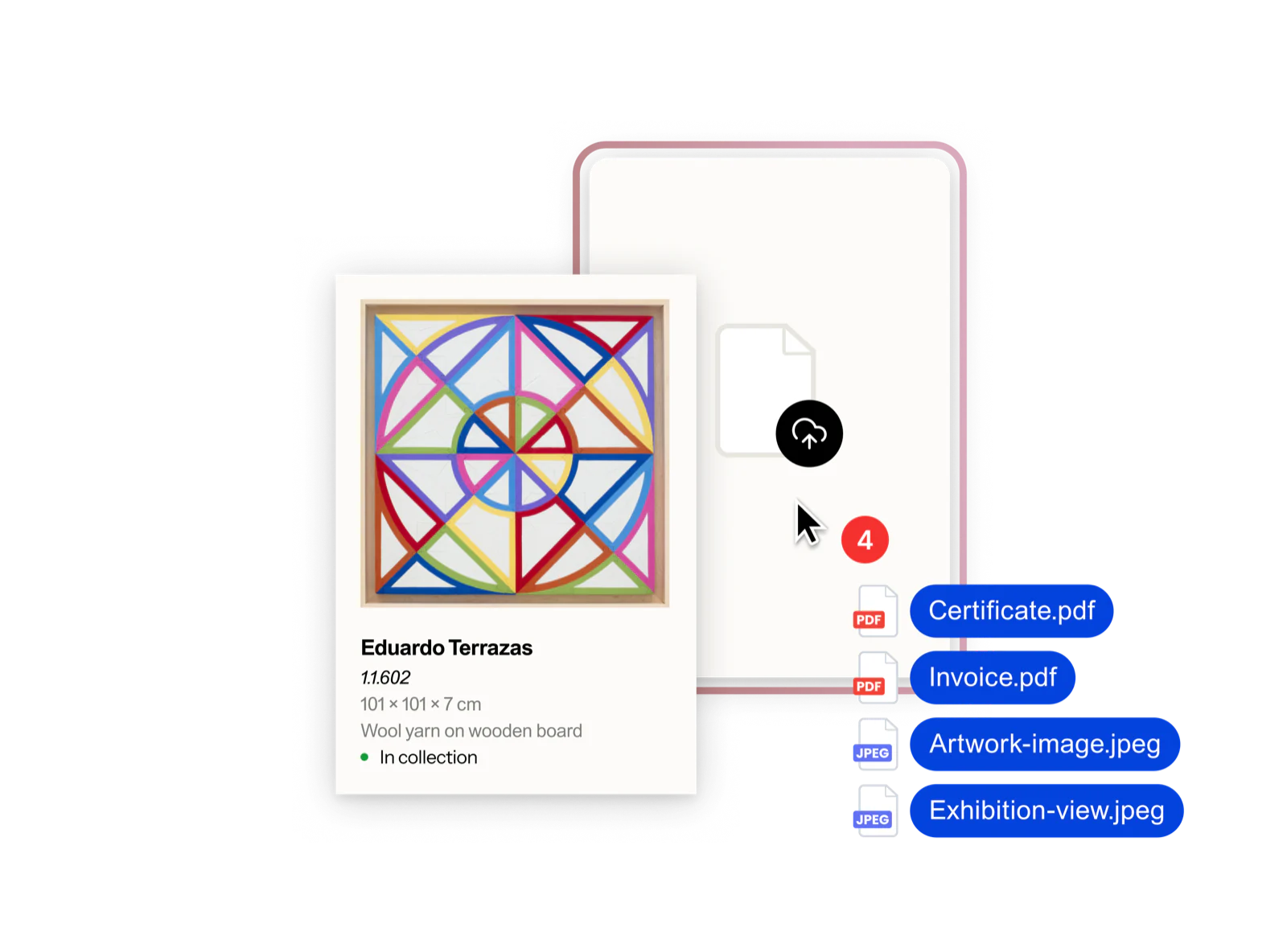
Attach acquisition records, appraisals, photography and dated condition reports directly to each artwork.
Public access
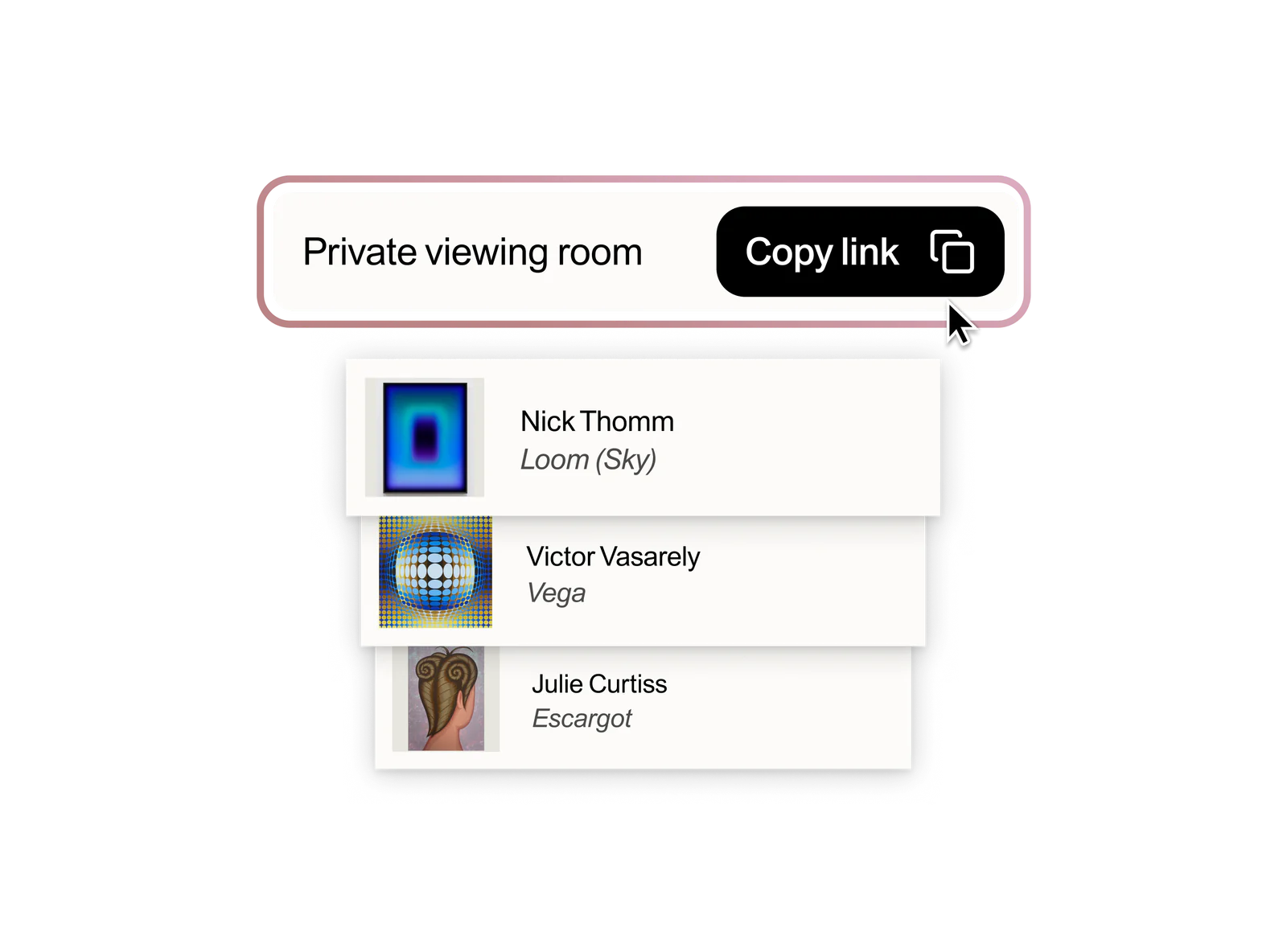
Create a public collection from approved records while internal values, locations, notes and files remain private.
Standardise artwork details, inventory numbers and documentation across the whole collection.
Track artwork locations and status across storage, display, loans, offices and other sites.
Keep condition reports, acquisition files, appraisals and photography connected to every work.
Institutional collections
Track artworks across offices and sites, with location, valuation, images, and supporting documents attached to each record. Keep information ready for internal reviews and insurance requests.
Build a structured catalogue with provenance and condition details for each work. Make selected artworks public when you want to share the collection more widely.
Give works across campuses, hospitals, and civic buildings consistent records and inventory numbers, so each piece can be identified and located as staff and spaces change.
Import an existing inventory from a CSV file, then add images, documents, and missing context gradually instead of rebuilding every record at once.
Excel, Artlogic & Artopia
Compare tools for cataloguing artworks, tracking locations and preserving collection records.
Scroll to compare all options
| Collection workflow | Excel | Artlogic |  |
|---|---|---|---|
| Collection inventory | Rows and columns you maintain | Dedicated artwork records | Dedicated artwork records |
| Images & documents | Images in cells; linked files | Attached to artworks | Attached to artworks |
| Locations & loans | Manually updated columns | Track locations and loan status | Track locations and loan status |
| Condition records | Notes, photos and separate files | Condition records and reports | Dated condition entries and files |
| Provenance | Notes and linked files | Provenance records | Provenance records |
| Valuations & insurance | Extra columns or sheets | Purchase and insurance values | Dated valuations and insurance values |
| Private sharing | Shared sheets or separate documents | Private viewing rooms | Private viewing rooms |
| Collection PDFs | Manually formatted layouts | Artwork lists and reports | Branded PDFs, lists and labels |
| Free inventory plan | Excel for the web is free | No free tier | 50 artworks, no credit card |
Last checked in 2026. Plans may change.