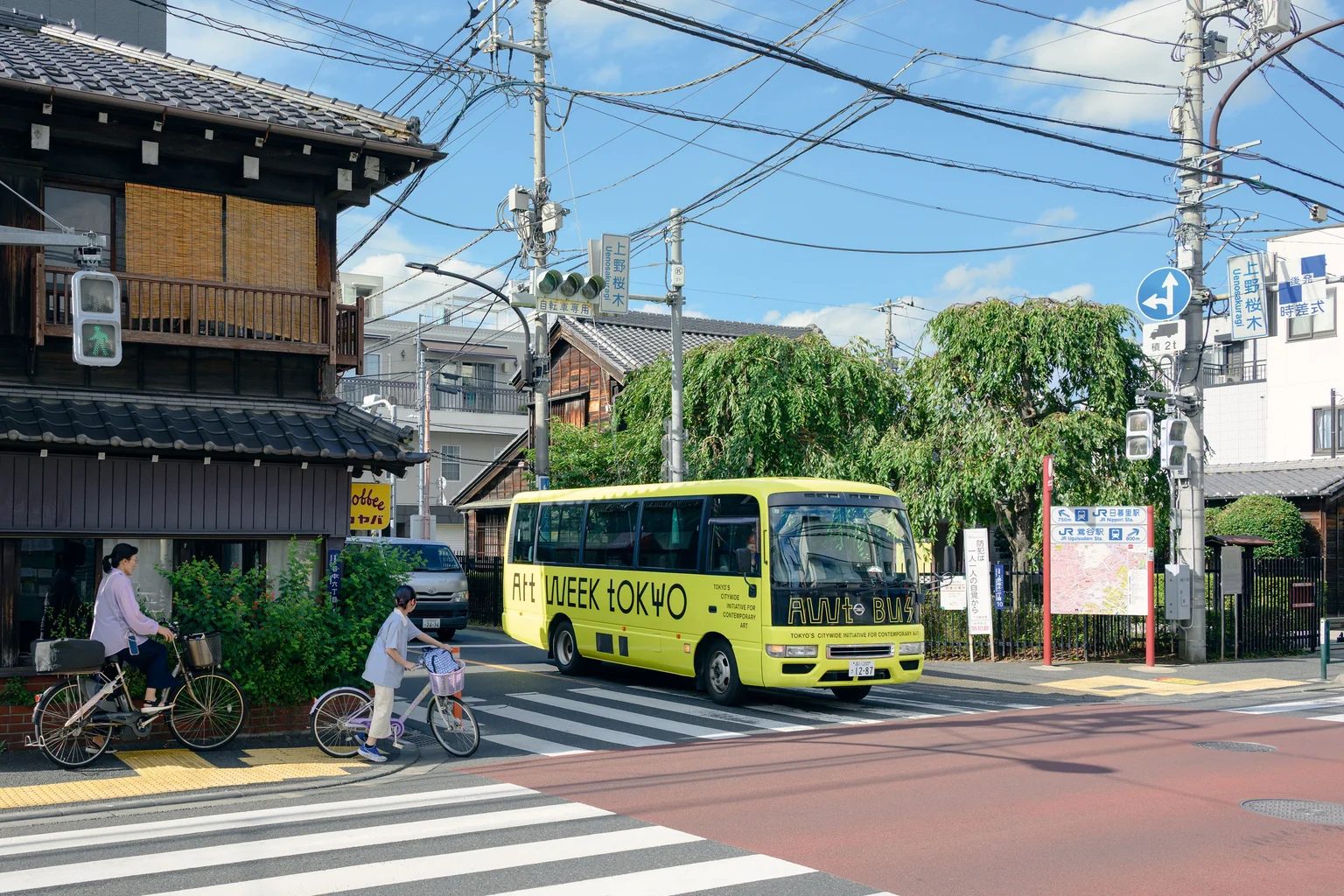
Tokyo’s art week makes a persuasive case for getting to know a city through its galleries. This November, a gallery itinerary can take in Koji Kamoji’s life between Japan and Poland, Nobuko Tsuchiya’s sculptures of fibreglass and found objects, and Julianknxx’s films shaped by Comorian song.
Art Week Tokyo runs from 4–8 November 2026, bringing together 56 museums, galleries and art spaces. This year, AWT Focus expands into ten exhibitions organised by ten curators at separate venues, developed with Vienna’s gallery initiative curated by. The new format gives the gallery programme particular weight, alongside major museum exhibitions and projects across the city.
1. Koji Kamoji at Take Ninagawa
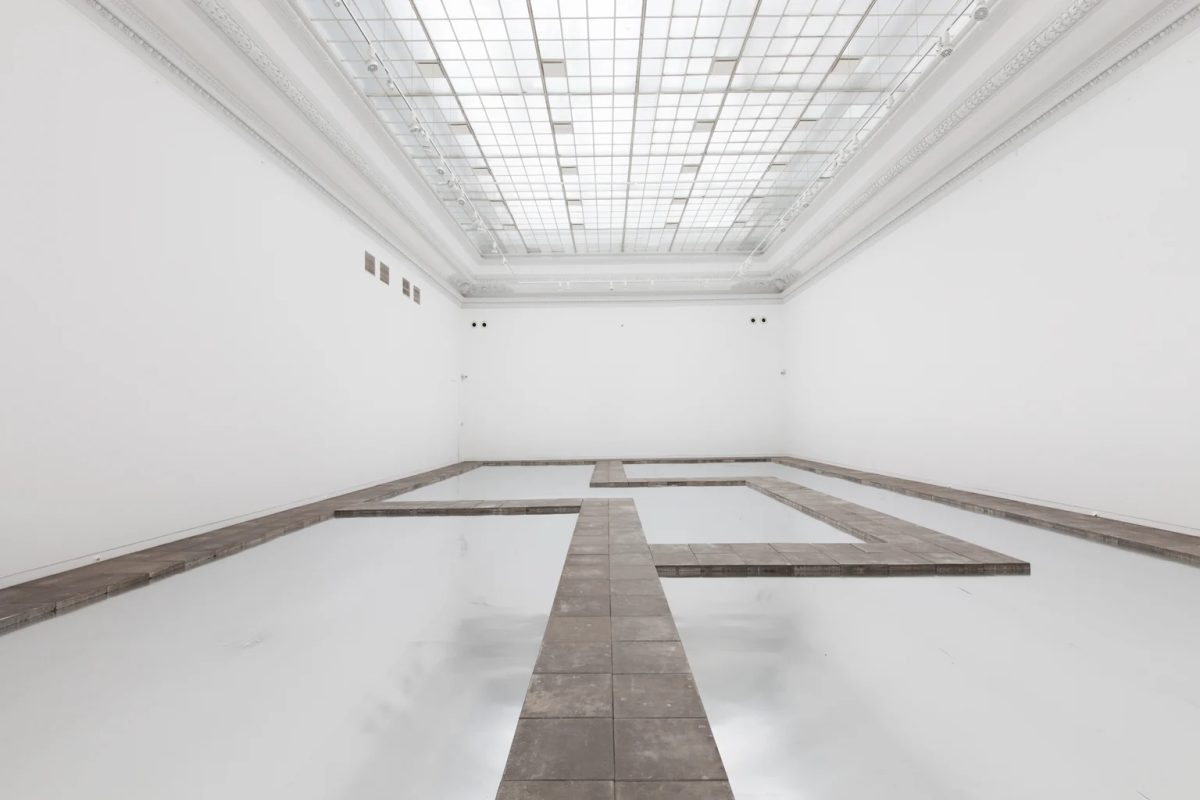
Koji Kamoji’s career complicates a neat national account of postwar art. Born in Tokyo in 1935, he moved to Poland in 1959 and became an important figure in its avant-garde. Everyday Life, curated by Maria Brewińska, brings that history to Take Ninagawa through installations and white paintings concerned with the persistence of life under extreme conditions.
The exhibition draws on Kamoji’s memories of interpreting for photographer Yoshino Oishi during interviews with Holocaust survivors in the 1980s. Suspended sheets of paper in Draught (1975/2026), a concrete ring in The Well (2026), and the repeated activity of painting give material form to questions of survival, intimacy and care.
The distance between these spare materials and the histories they carry makes this a particularly compelling place to begin. Kamoji’s work also offers a reminder of how much of Japanese art history has been made through lives and exchanges beyond Japan.
2. Mary Weatherford at Shibunkaku
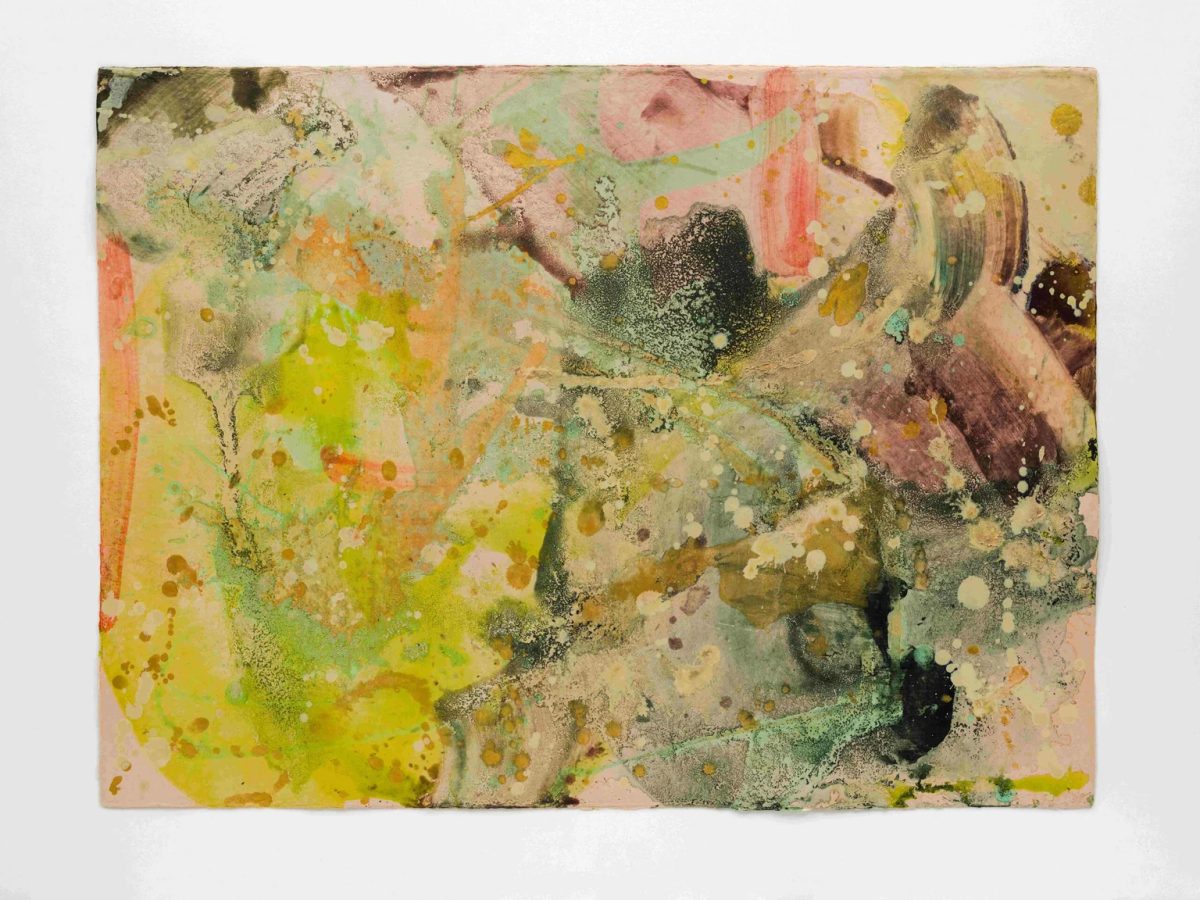
Mary Weatherford’s paintings are often recognised by the neon tubes attached to their surfaces. At Shibunkaku, Komorebi gives equal attention to a more intimate part of her practice: shellac ink on gampi paper. Curated by Jeremy Strick, her first solo exhibition in Japan brings works made in 2024 together with paintings incorporating seashells and a new neon piece.
The shift in material matters. On paper, Weatherford’s gestures meet a medium that dries quickly; on canvas, physical additions bring the painting into the space around it. Strick’s presentation takes its cue from the dappled light suggested by the title, evoking the experience of walking through a forest.
The appeal is in seeing these different kinds of light together: light suggested by ink and colour, light caught by a shell, and light emitted by neon. Weatherford and Strick speak at the gallery on 4 November, making this a strong choice for the opening evening.
3. Nobuko Tsuchiya at SCAI The Bathhouse
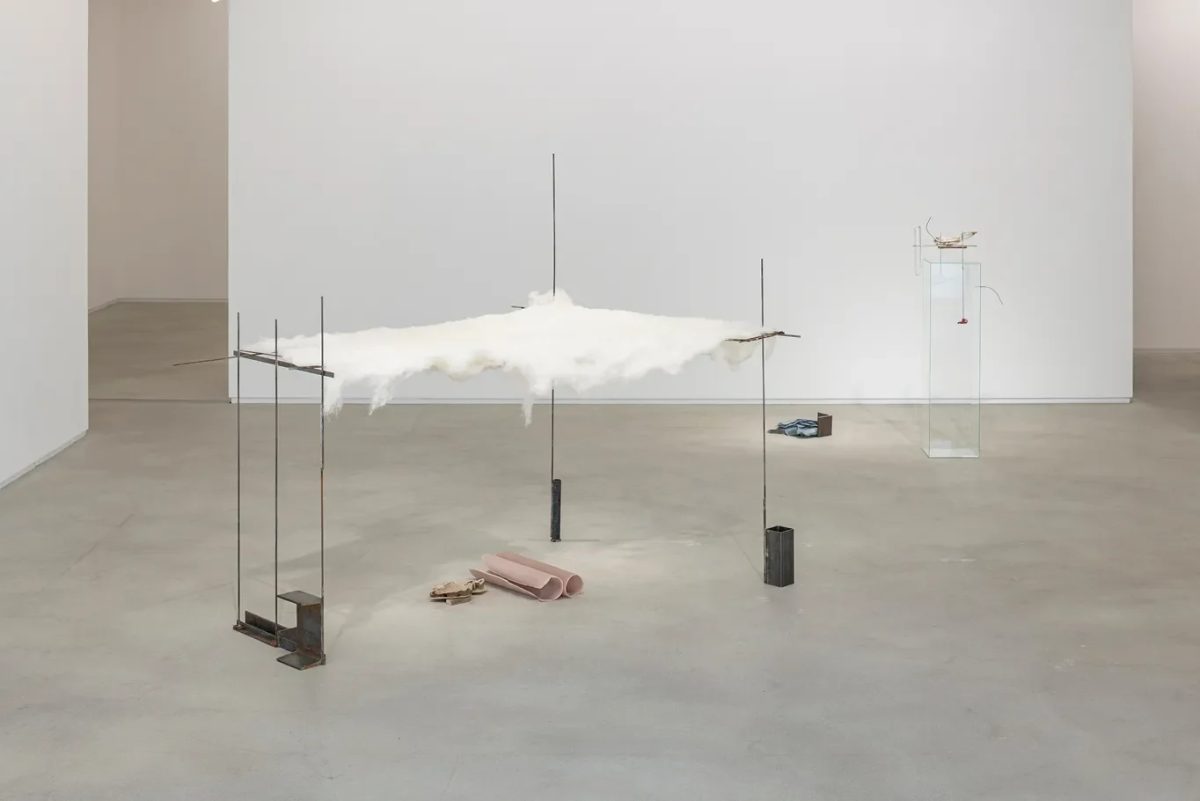
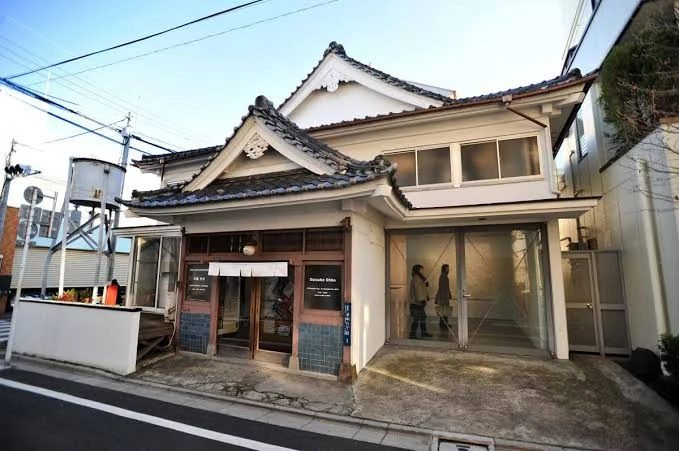
Fibreglass, fur, metal, resin and found objects enter Nobuko Tsuchiya’s sculptures without quite settling into recognisable things. Their organic shapes and industrial parts suggest equipment, bodies or fragments of a system whose purpose remains elusive. Ace of Hearts, a new project curated by Martin Clark, brings these encounters into SCAI The Bathhouse.
Clark’s account of the exhibition places particular emphasis on the space between the sculptures. Each object has its own presence, but the installation develops through their relationships: gaps, proximity and the routes a visitor takes around them. That makes this a show to experience at the scale of the room, with attention to what happens between individual works.
The gallery gives the visit another layer. A former public bathhouse in Yanaka now houses objects whose own functions are difficult to pin down. The building’s earlier life makes a suggestive setting for Tsuchiya’s transformations of materials, and a reason to include this part of northern Tokyo in the week.
4. Julianknxx at space Un
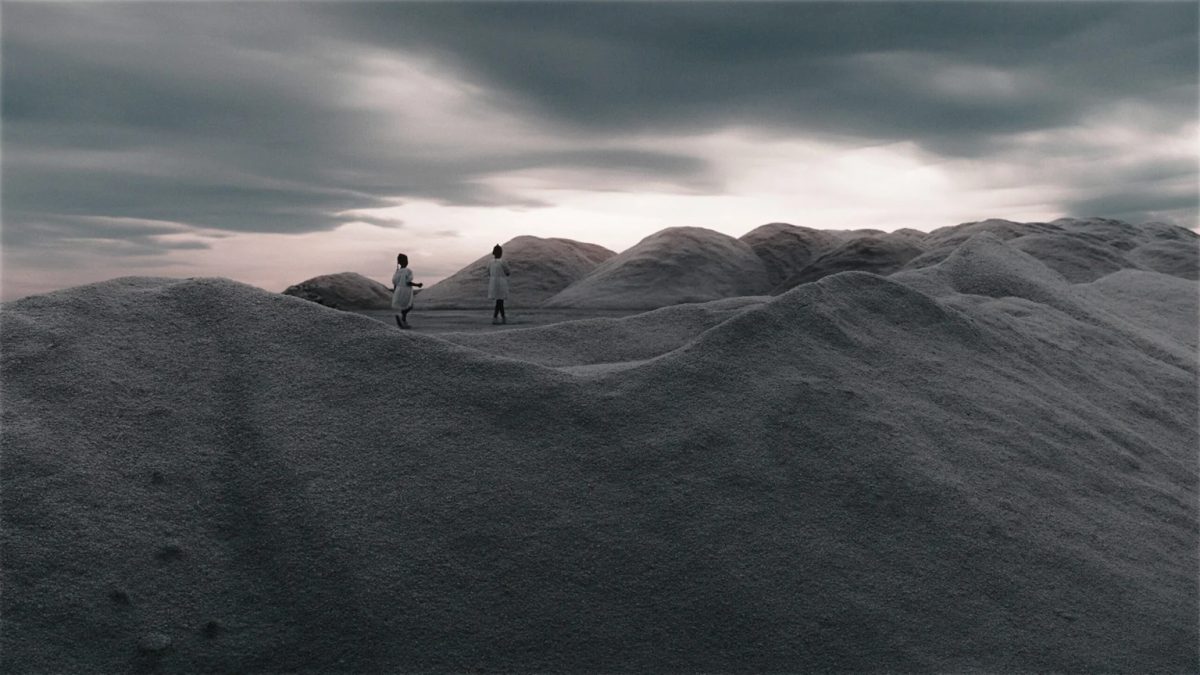
Ekow Eshun, who curated The Clearing at space Un in 2025, returns with Julianknxx’s first exhibition in Japan. How Much Light Must I Consume? centres on What Colours Can We Dream in This Night Filled with Salt? (2025), a film shaped by Comorian lullabies collected and performed by the Marseille-based Boras Choir.
That connection between islands in the Indian Ocean and a Mediterranean port gives migration a specific musical geography. Songs pass between places and generations, carrying forms of knowledge that need people to keep singing them. Film, sculpture and sound bring that process into the gallery, with special choral performances also forming part of the project.
Space Un’s programme is itself part of the interest: the gallery and residency platform supports exchanges between Japan, Africa and the African diaspora. Give the film a full viewing window and check the performance schedule separately. The voices are central to the work, and deserve as much attention as the images.
5. Mariko Mori at the Mori Art Museum
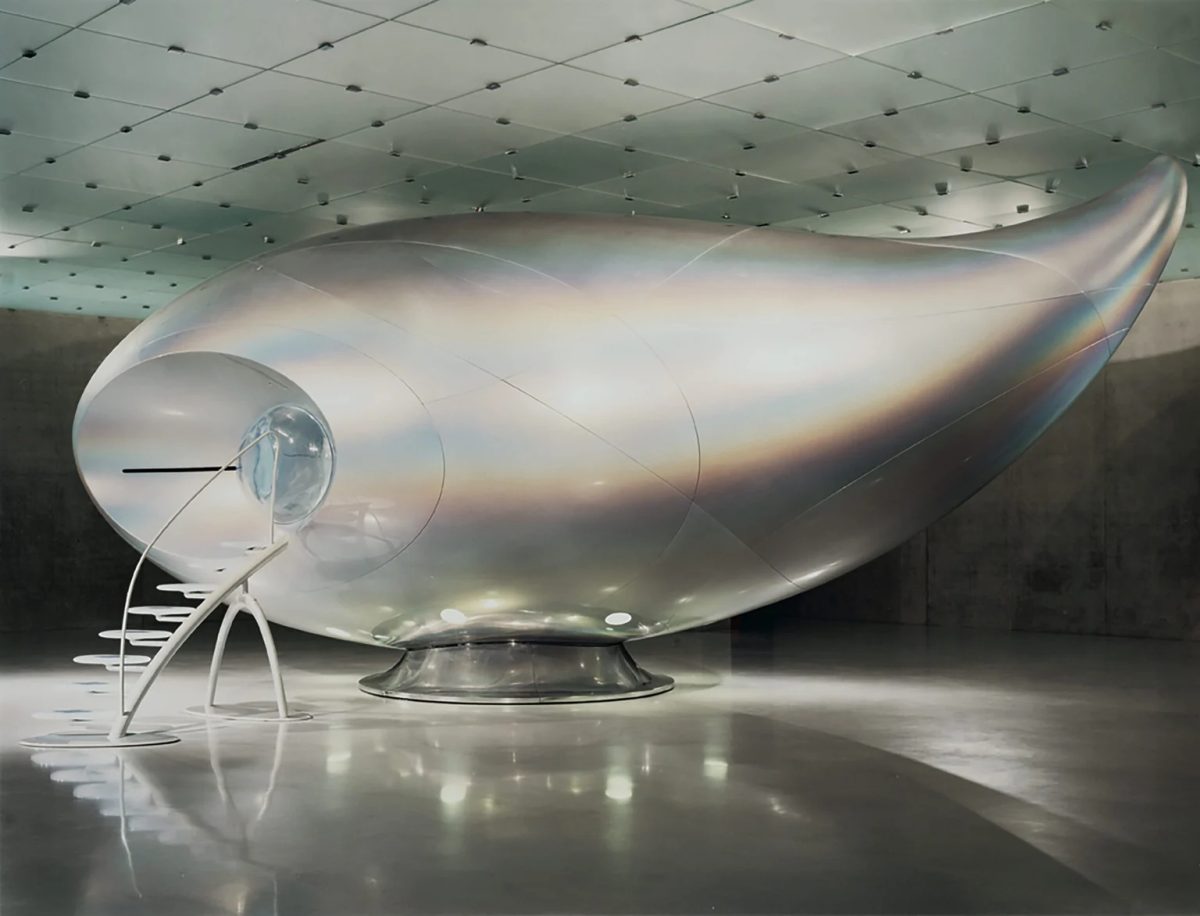
Mariko Mori’s Cyborg photographs and videos of the 1990s brought science-fiction imagery into questions of gender, popular culture and the human body. All That Shines follows the expansion of that practice into Buddhism, consciousness and the cosmos. Curated by Alexandra Munroe and Mami Kataoka, the retrospective is her first major survey in Japan since 2002.
Technology becomes a means of making those concerns tangible. Wave UFO uses participants’ brainwave feedback to generate imagery; Tom Na H-iu translates data associated with cosmic phenomena into light. The works give otherwise invisible processes a form that visitors can encounter physically.
Seeing the early images alongside these installations should make the continuities in Mori’s work easier to follow: the recurring wish to move beyond the limits of an individual body, and to imagine a connection with something larger. Leave an evening for the museum after the Roppongi galleries. Its late hours allow a more generous visit, and entry into the Wave UFO pod has limited availability.
6. Hikaru Fujii at the Artizon Museum
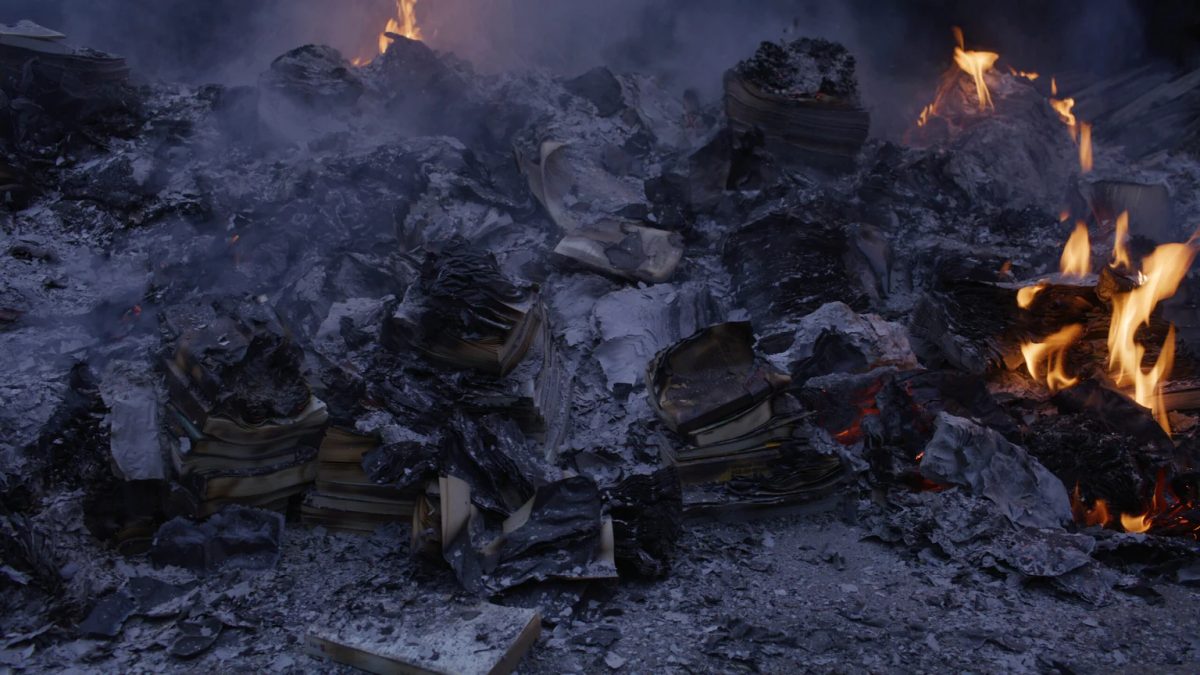
A museum collection gives some versions of history a lasting public form. Hikaru Fujii’s WHOSE LIGHT? turns attention to the decisions behind that process. For the seventh Jam Session exhibition, he works with the Ishibashi Foundation Collection and his own moving-image practice to examine how authority and historical knowledge are produced.
The point of departure is Plato’s allegory of the cave, with its association between light and truth. Fujii shifts the emphasis to the person directing the light. What a collection reveals depends on who selects, arranges and interprets its objects. His combination of research, performance and documentary methods brings that proposition into the exhibition.
For a collector, there is a pointed question here about the passage from private choices to public history. The works a collection preserves, and the relationships it builds between them, help determine what later audiences understand as significant.
Continue nearby at Yutaka Kikutake Gallery in the Toda Building, where Augusto Arbizo’s The Quiet brings six painters together around observation and ordinary subjects. The selection crosses generations, from Yuki Katsura to Mai Takeshita, creating another opportunity to consider what changes when works are seen in new company.
7. TOKYO ATLAS
TOKYO ATLAS extends the week towards the waterfront, where the setting becomes an active part of an exhibition visit. At Daiba Park and Odaiba Marine Park, works including Yayoi Kusama’s Narcissus Garden meet a landscape that carries the history of a former coastal battery and opens onto Tokyo Bay.
Other venues stretch across Aomi and Tennoz, taking in parks, waterfront infrastructure and an underground parking lot. The differences between these places are part of the attraction: scale, weather and the movement of the city enter the encounter with the works.
This is a separate exhibition programme running beyond Art Week Tokyo. Give it a dedicated afternoon and plan from its own venue map. The underground parking-lot venue at Aomi Minami Port Park requires a timed reservation; it is worth making that decision before setting out.
Also on our radar…
Erika Verzutti at Misako & Rosen
In 2025, Erika Verzutti and curator Julie Boukobza installed sculptures in a bedroom at Paris’s Hôtel Balzac. Portrait of Sculpture follows that collaboration into oil monoprints: images of sculptures that have since gone to other places and owners. The premise gives the works a touching doubleness, as both independent images and recollections of objects no longer at hand. Find the exhibition in Kita-Otsuka.
Explore Erika Verzutti at Misako & Rosen ↗
Taro Masushio and Sophie Nys at XYZ collective
Olivier Mignon brings Masushio’s photography and Nys’s sculpture together around the body, desire and the meanings attached to objects. Masushio examines queer embodiment and the politics of looking; Nys approaches language through ordinary things. The pairing is a reason to include the artist-run XYZ collective in Sugamo on a northern Tokyo gallery day, alongside Misako & Rosen in Otsuka.
Explore Taro Masushio and Sophie Nys ↗
Natsumi Aoyagi at Misa Shin Gallery
Possible Words, Possible World, curated by Jaemin Shin, brings the apparently remote subjects of reclaimed land and the family registry into the same conversation. Aoyagi works through moving image, installation and poetry to examine records and ownership at the scale of territory and intimate relationships. It is an intriguing choice for anyone interested in how administrative systems enter personal life.
Explore Natsumi Aoyagi at Misa Shin Gallery ↗
AWT Video
X Zhu-Nowell’s Your Travel Guide To . . . brings ten artists’ films to a pavilion in the lobby of SMBC East Tower, Marunouchi. The programme asks how places are shaped by movement, memory and the circulation of images. Some works demand substantial time: Ken Okiishi’s Brian at Home runs for 86 minutes. Choose a screening window accordingly. Admission is free, 10:00–18:00 on 4–8 November.
AWT Bar
Kae Ito’s Kuru Kuru uses modules of stainless-steel arcs that can become seats, tables or objects in their own right. At emergence aoyama, the installation meets food by La & Le and cocktails devised by Natsumi Aoyagi, Mariko Mori and Yoshihiro Suda. The artists’ ideas continue in another form over a drink. Open 10:00–22:30 on 4–8 November; entry is free, with food and drinks charged separately.
Extending your trip: Art Collaboration Kyoto
Collectors wanting a fair visit can continue to Kyoto for Art Collaboration Kyoto. Public days run 7–9 November at the Kyoto International Conference Center, following an invitation-only preview on 6 November. This is a separate leg of a Japan itinerary, with its own tickets and programme.
Explore Art Collaboration Kyoto ↗
Planning your visit
When is Tokyo Art Week 2026?
This guide covers 4–8 November 2026, the dates of Art Week Tokyo. Several exhibitions and independent programmes run for longer, so check individual dates when extending your stay. Official Art Week Tokyo programme ↗
Are there art fairs during Tokyo Art Week?
The official Art Week Tokyo programme centres on galleries, museums and special projects, with no central booth-based art fair. AWT Focus consists of ten curated exhibitions at separate spaces. For a fair visit during the same period, Art Collaboration Kyoto has public days on 7–9 November and an invitation-only preview on 6 November. It takes place in Kyoto and needs separate travel and tickets. Art Collaboration Kyoto visitor information ↗
When do the free AWT buses run?
The free buses operate 6–8 November, 10:00–18:00, with departures scheduled every fifteen minutes. Collect a free wristband from staff at your first stop and show it for subsequent rides. Each wristband is valid for that day, and a new one is needed the following day. For visits on 4–5 November, plan your travel using trains, walking or taxis. AWT Bus routes and wristbands ↗
How should I plan my itinerary?
Plan by area, with one substantial exhibition and a few nearby galleries. Kyobashi pairs the Artizon Museum with The Quiet at Yutaka Kikutake Gallery; Ginza includes Shibunkaku. In northern Tokyo, build separate travel time between Yanaka, Otsuka and Sugamo. Around Azabu and Roppongi, visit galleries during the day and use the Mori Art Museum’s evening hours. Give TOKYO ATLAS its own waterfront outing.
Where can I find more exhibitions and events?
Tokyo Art Week brings selected exhibitions together with addresses, opening-day information and official links. Use the organiser’s Art Week Tokyo website for its full programme and event reservations, and confirm final access details with individual venues. Tokyo Art Week visitor guide ↗
Explore more exhibitions and plan your route with the Tokyo Art Week guide.