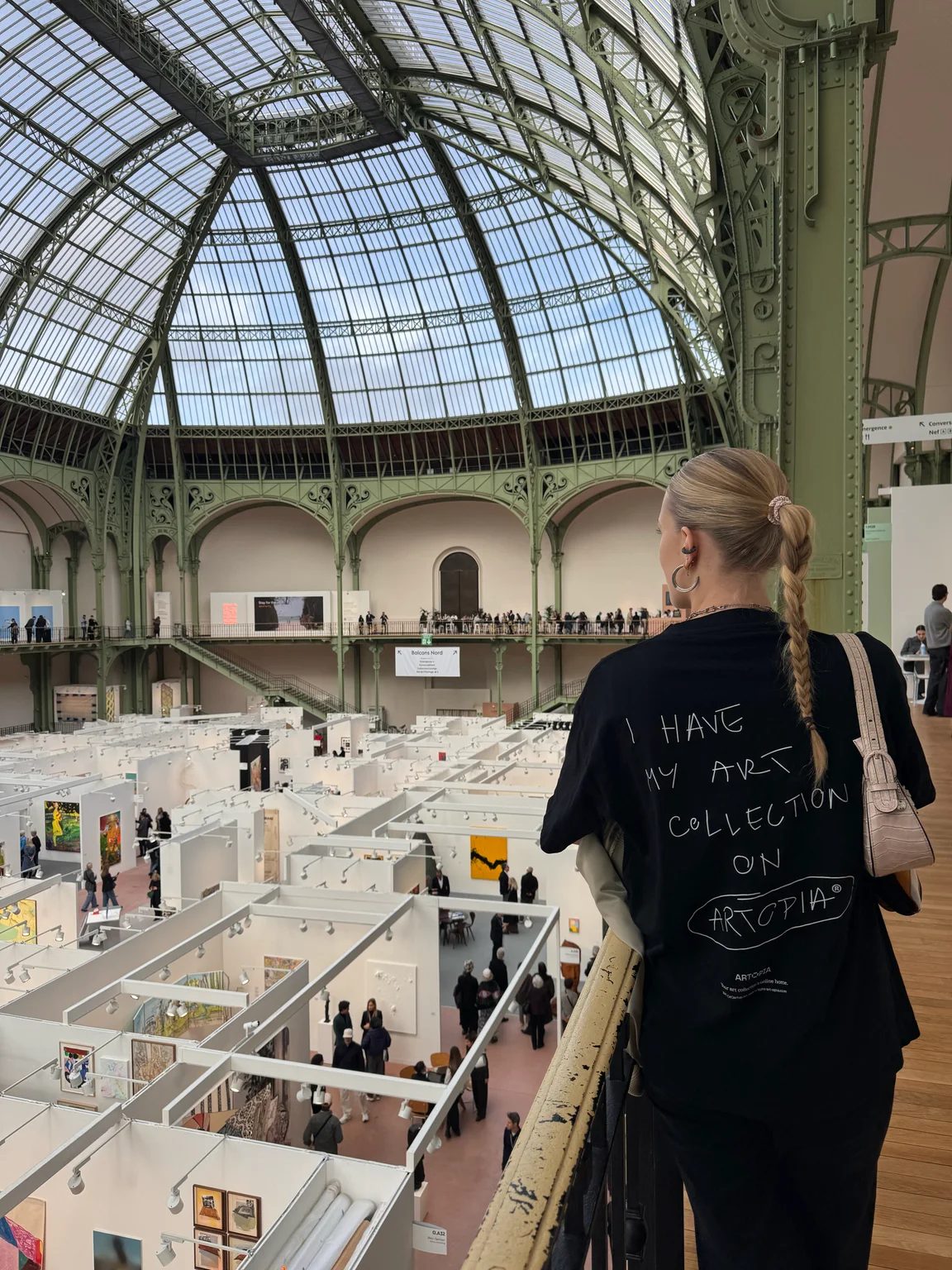
Paris Art Week is centred mainly around Art Basel Paris, but the wider programme extends far beyond the Grand Palais. Although Art Basel was open for only three of its five scheduled days this year, we still made the most of the week by visiting other fairs and projects across the city. Here is a continuation of highlights from our visits.
Art Basel Paris
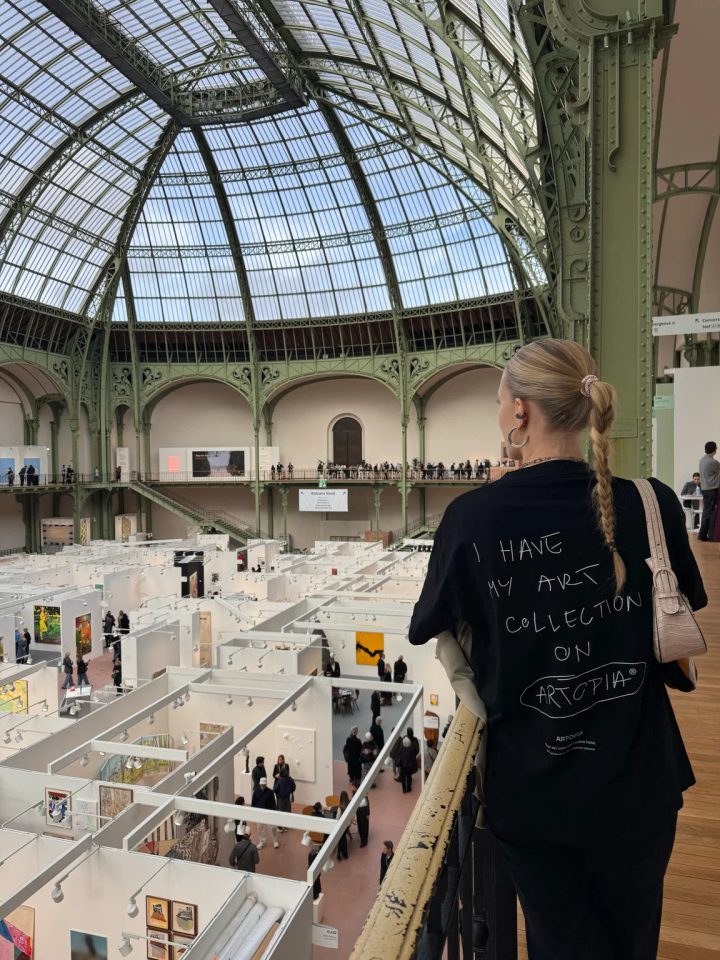
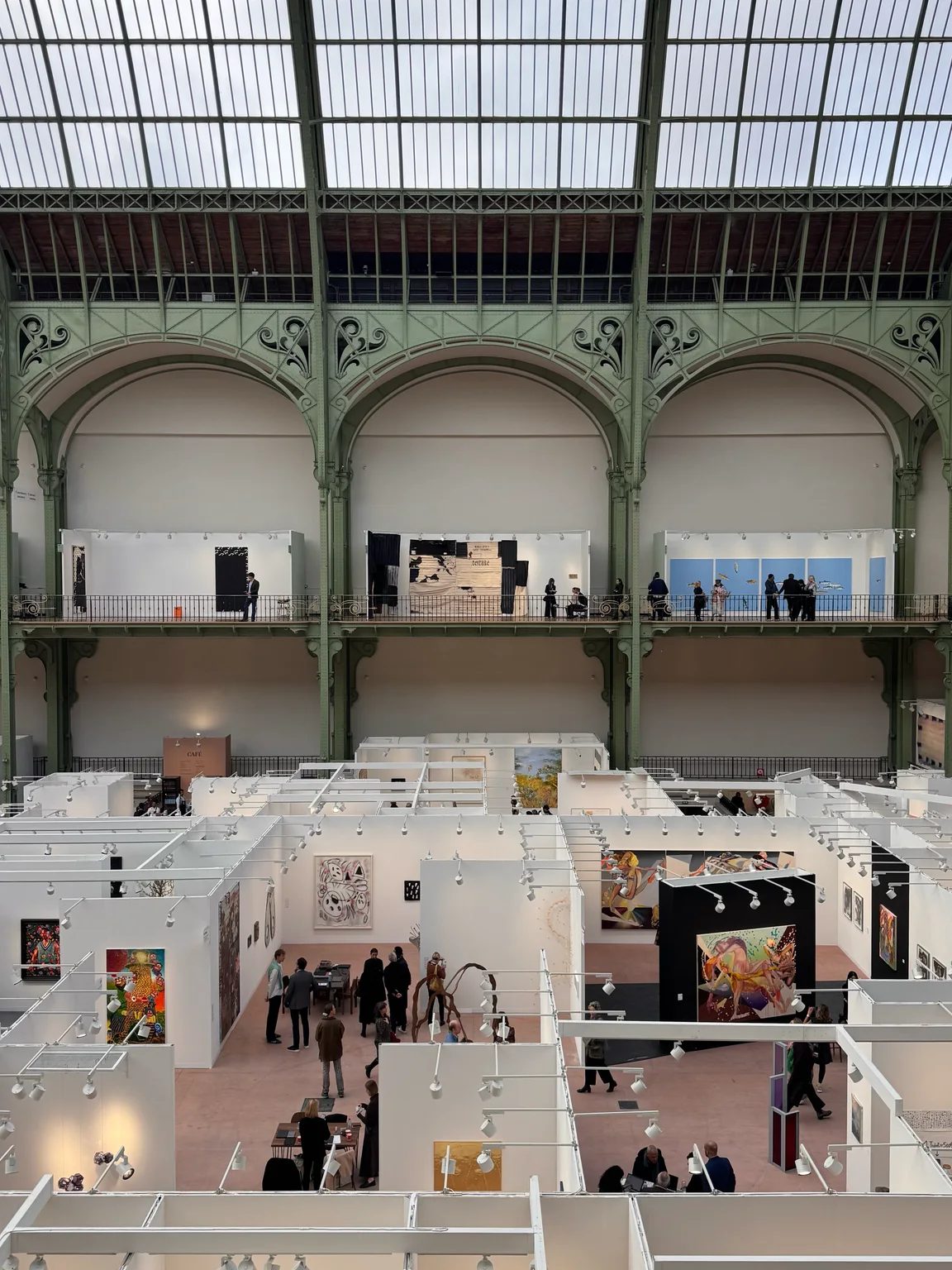
Taking place in the iconic Grand Palais, Art Basel Paris hardly needs an introduction. With more than 200 galleries from 41 countries and territories, it was the largest art fair we had visited so far. For its fifth edition, the fair was structured around three sectors: Galeries, Emergence and Premise. Galeries presented the full breadth of participating galleries’ programmes, Emergence focused on emerging galleries and artists, and Premise brought together highly singular curatorial proposals. The special initiative Oh La La!, art-directed by French actress Philippine Leroy-Beaulieu, invited galleries to rehang their booths and present new works around the theme “Myths and Legends.” You can explore more about the initiative here.
We also attended Art Basel Paris’s Conversations series, which brought together artists, curators and other cultural figures for live exchanges on the questions shaping art and culture today. One of our highlights was the conversation between artist Simone Fattal and curator Hans Ulrich Obrist, centred on Fattal’s forthcoming exhibition Cities at the Bottom of a Lake at the Musée d’Art Moderne de Paris and her wider artistic journey. It was a pleasure to hear Fattal reflect on the ideas and experiences that have shaped her practice. You can find the full list of conversations here.
As part of this year’s public programme, Art Basel Paris and its partners, including Miu Miu, organised a wide range of installations and pop-up exhibitions across the city. We visited Alice Diop’s Geste de Consolation at the Palais d’Iéna, an immersive project that brought together film, archival material, reading and performance. It offered a more contemplative counterpoint to the scale of the fair. Read more about the project here.
Art Basel Paris Artist Highlight: Paloma Proudfoot at The Approach
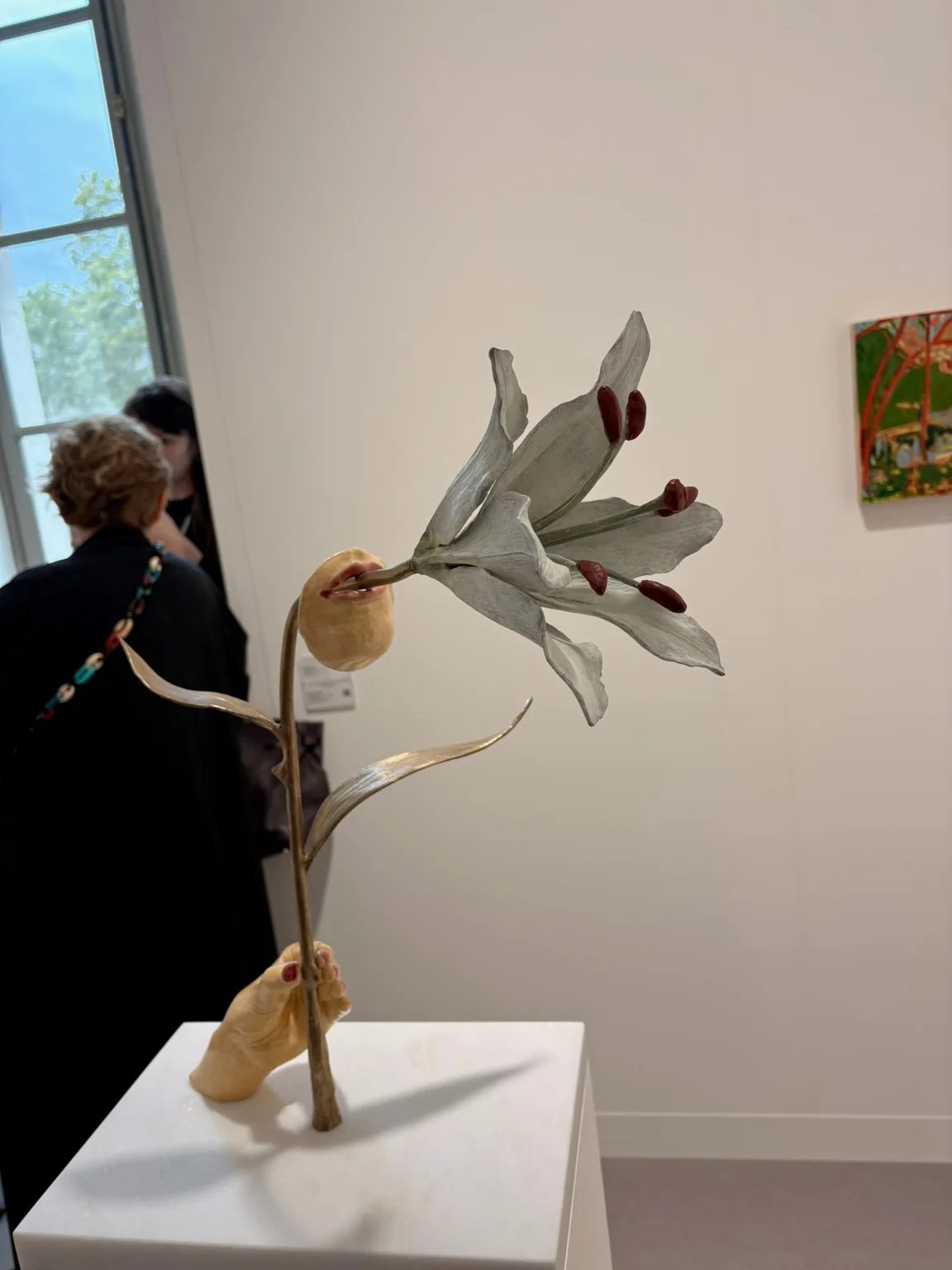
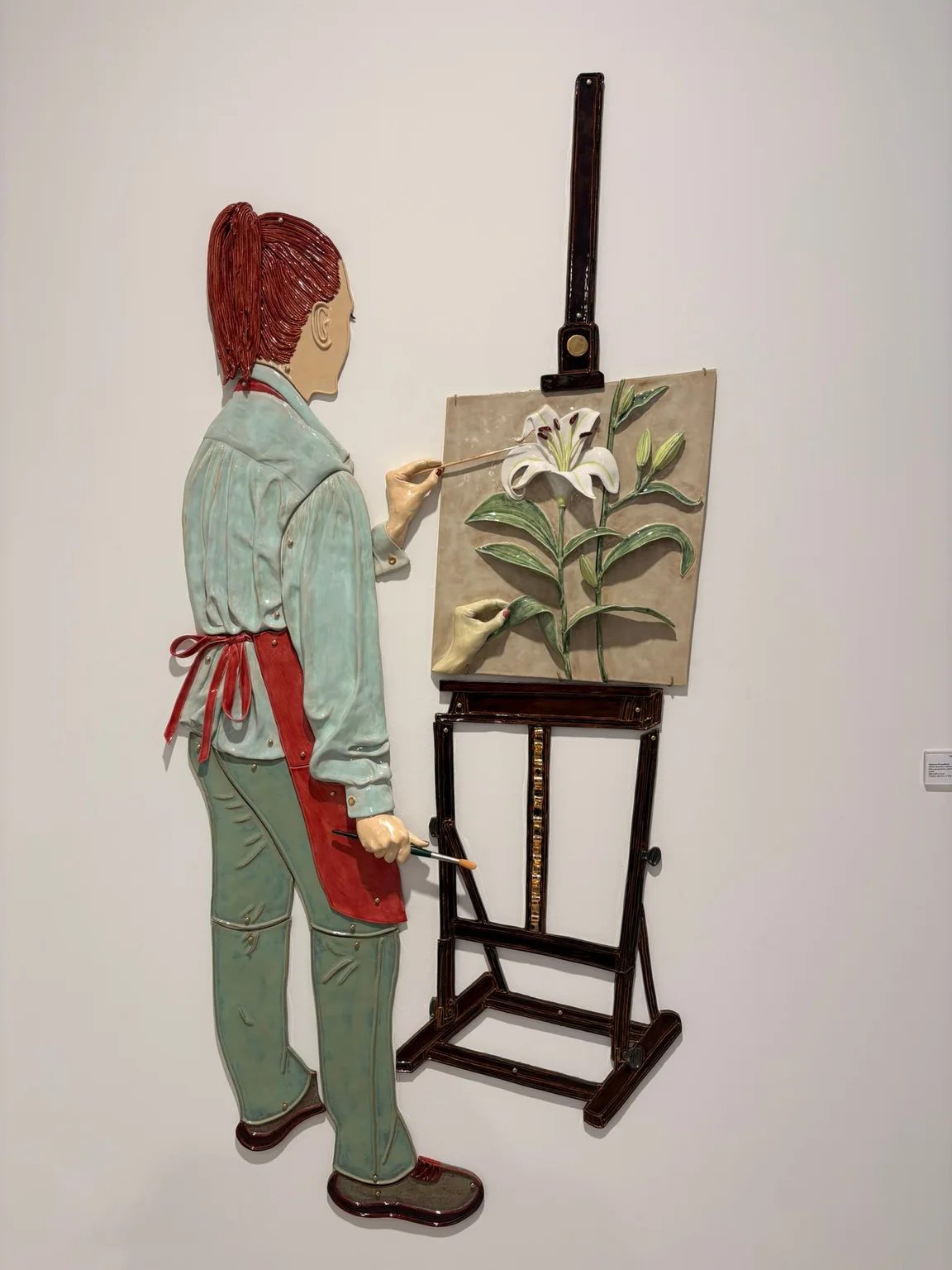
While many artists could have made it into our highlights, Paloma Proudfoot, represented by The Approach gallery, was one we wanted to mention. Proudfoot is a London-based artist working across sculpture, clothing-making, text and performance. With a background in clothing design, her artistic process mirrors flat pattern-cutting, as she initially works with paper templates before realising them as three-dimensional works. Her practice is playful, while also reflecting on the concerns of our generation, particularly the ways in which corporeality is articulated and registered.
The hyper-realistic yet slightly uncanny sculptures presented at Art Basel Paris were both eye-catching and inviting. The combination of bodily parts and lily flowers invited us to think more deeply about the relationship between humans and nature. A hand holding a flower, and it emerging from a mouth at the same time, suggested questions of freedom of expression, power and gender dynamics. The flat ceramic piece depicting a woman painting a lily in front of an easel was as decorative as it was evocative, turning the act of painting into another subject within the work.
OFFSCREEN
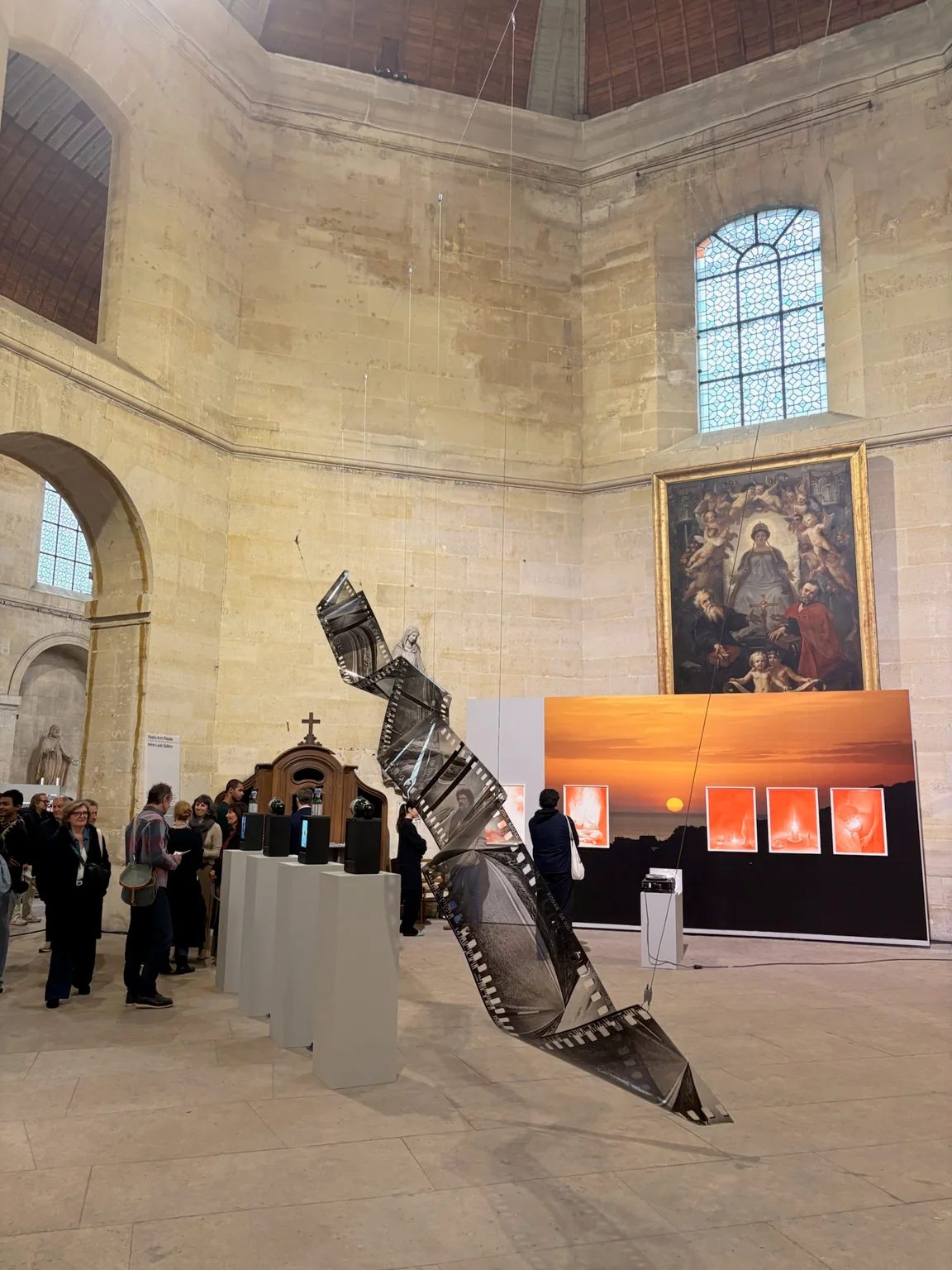
For its fifth edition, OFFSCREEN presented more than 30 artists in the monumental Chapelle Saint-Louis de la Salpêtrière. The fair brought together contemporary, image-based installations across a wide range of media, including video, performance, photography, sculpture, mixed-media installations and digital works. The decision to place contemporary art inside a chapel made the fair particularly distinctive.
OFFSCREEN also hosted a talks series designed to foster dialogue at the crossroads of art and ideas. This year’s programme brought together artists including Barbara Bloom, Ana Mendieta, Ibrahim Mahama, Lívia Melz and Daria Koltsova with art historians, curators, critics and editors from the contemporary art world. Read more about the programme on the OFFSCREEN website.
OFFSCREEN Artist Highlight: Josef Achrer with Galerie Bene Taschen
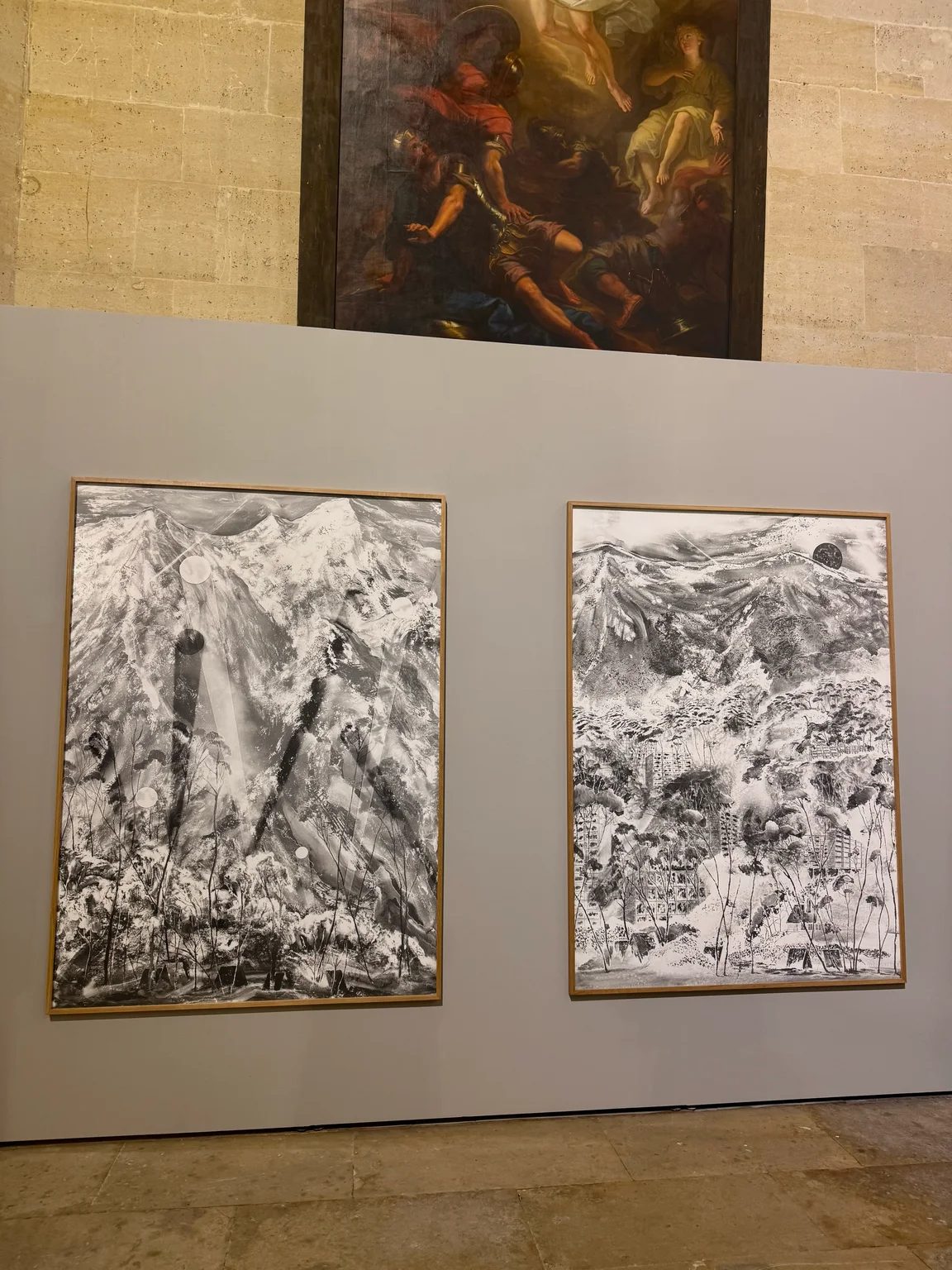
Josef Achrer is a Czech artist represented by the Cologne-based Galerie Bene Taschen. He works primarily with photograms* and painting. While photograms are often associated with abstract shapes or the outlines of objects, Achrer uses the process to create images that resemble paintings. The dreamlike, nature-focused works presented at OFFSCREEN explore emotional tension through different gradations of light, suggesting something beyond the visible realm.
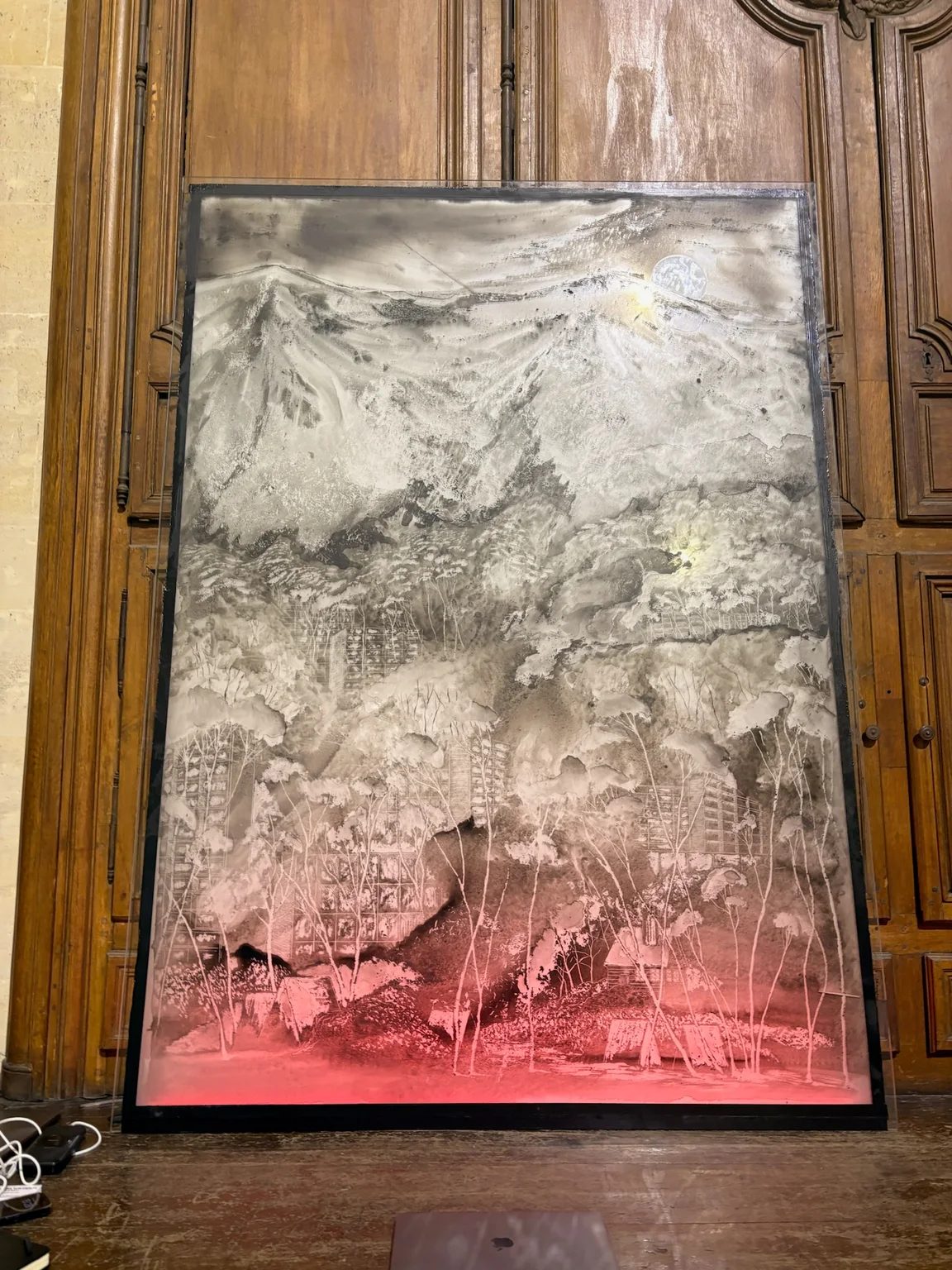
The presentation also included the glass template Achrer used to create the photograms, made with stencils and objects. The light-sensitive paper beneath was exposed to different degrees of light in the darkroom, resulting in photograms with a wide range of tonal values, from white to black. The same template could be used up to seven times.
There was almost a magical quality to these works. What initially appeared natural, or even accidental, was actually the result of a meticulously considered process. Achrer’s Czech roots and his time spent in China were also visible in the landscapes he created, where grandiose mountains appeared alongside brutalist buildings and hut-like houses. The works were unlike anything we had seen before.
At first glance, they resembled beautiful painted depictions of nature. Once we understood the technique behind them, however, the works became even more impressive. They made us question whether it is the creative process or the final image that constitutes the artwork.
*Photograms are photographic images that are made without a camera by placing objects directly onto a light-sensitive material, such as photographic paper, and then exposing it to light.
AKAA Art & Design Fair
Our final visit of the week was to AKAA, the Also Known As Africa Art & Design Fair. The fair is focused on promoting the visibility, mobility and recognition of African and Afro-descendant artists on the international stage. For its 11th edition, AKAA placed particular focus on visual memory, archival histories and the power of contemporary African and Afro-descendant storytelling, exploring how paper and photography can give these ideas a tactile and reflective form.
This year’s fair brought together 47 galleries and 72 artists from a range of countries and territories. The open layout of the Carreau du Temple, with its more intimate nooks and corners, was a good fit for the fair and encouraged more organic conversations between gallerists, artists and visitors.
One of the first things to catch our attention was Senegalese photographer Gabriel Dia’s monumental installation. An immersive series of large-scale photographs printed on fabric and suspended throughout the space, Mother’s Heritage drew on the artist’s intimate childhood memories and aligned closely with the edition’s focus on memory and heritage. Read more about the project here.
For the first time, the fair also launched AKAA PHOTO, a section dedicated to photographers shaping visual memory around themes such as cultural heritage, reinvented traditions, urban transformation, and more. Learn more about AKAA and AKAA PHOTO on the fair’s official website.
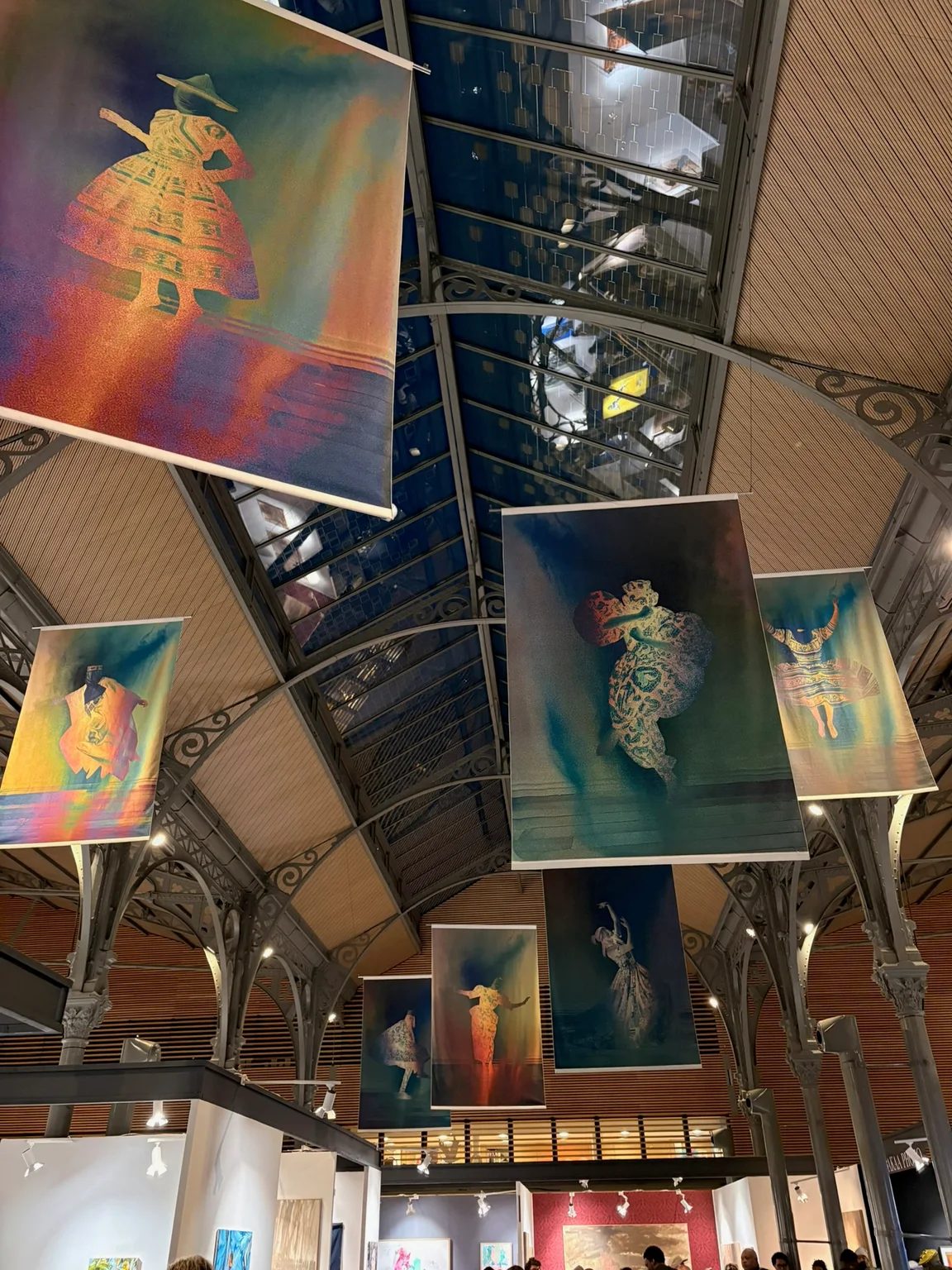
Also Known As Africa Artist Highlight: Jomad at OOA Gallery
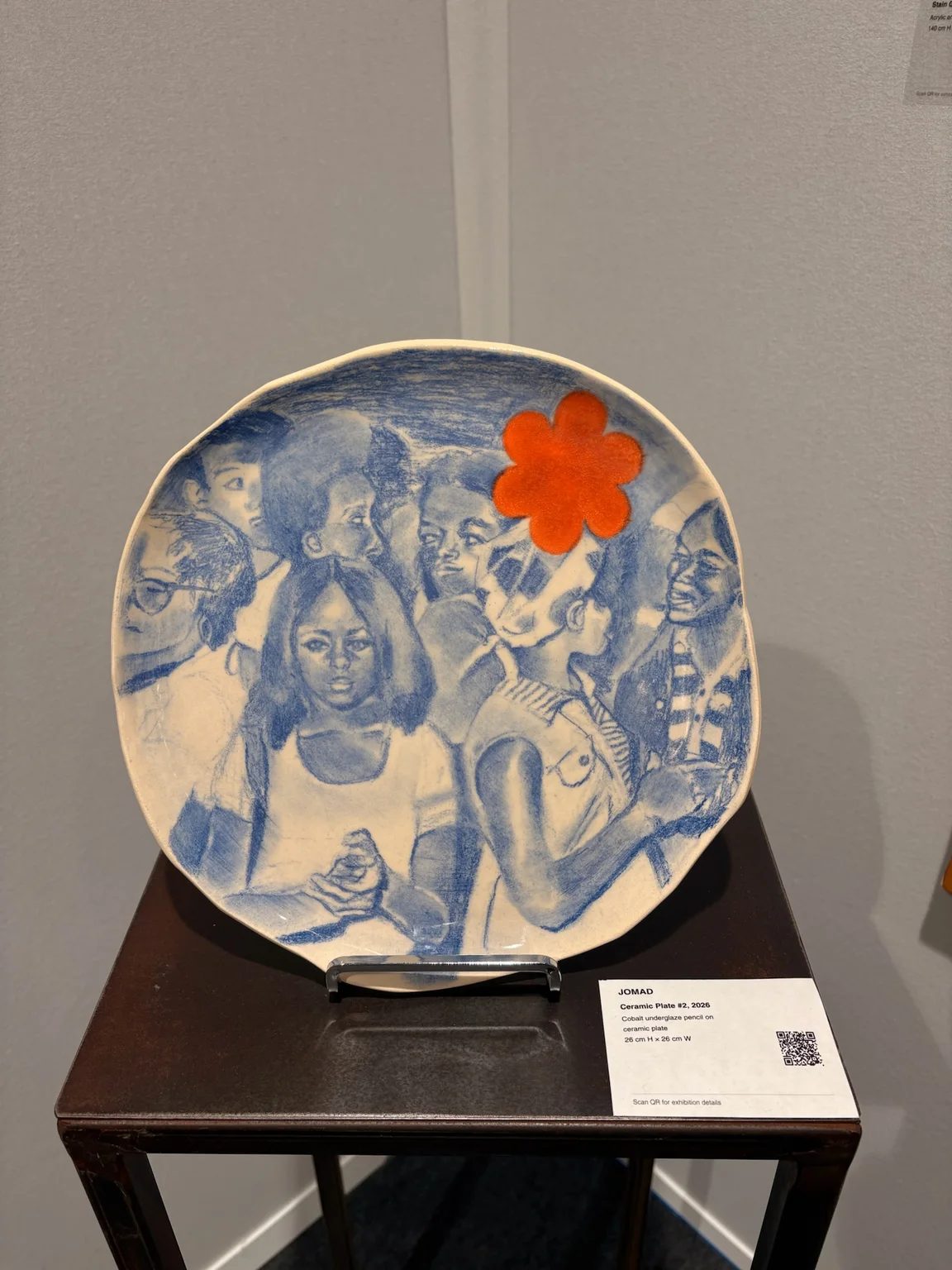
Jomad is an artist of Martiniquais and Ivorian descent, based in Paris and represented by the Barcelona-based OOA Gallery. Her artistic journey began with graffiti and lettering, before she pursued studies in art, architecture and engineering. Over the years, her practice has expanded to include ceramics, painting and public art. She is best known for a vibrant figurative style imbued with poetry and a deep connection to the imagination.
Through richly coloured figurative compositions, Jomad brings together botanicals, portraiture and symbolic environments that do not seem tied to a particular place. These elements express and explore memory, Caribbean identity, intimacy and emotional transformation. The compositions seem to extend beyond the canvas, filling the space around them and bringing the viewer into an imaginative world where flowers, bodies and architectural spaces are no longer separate elements.
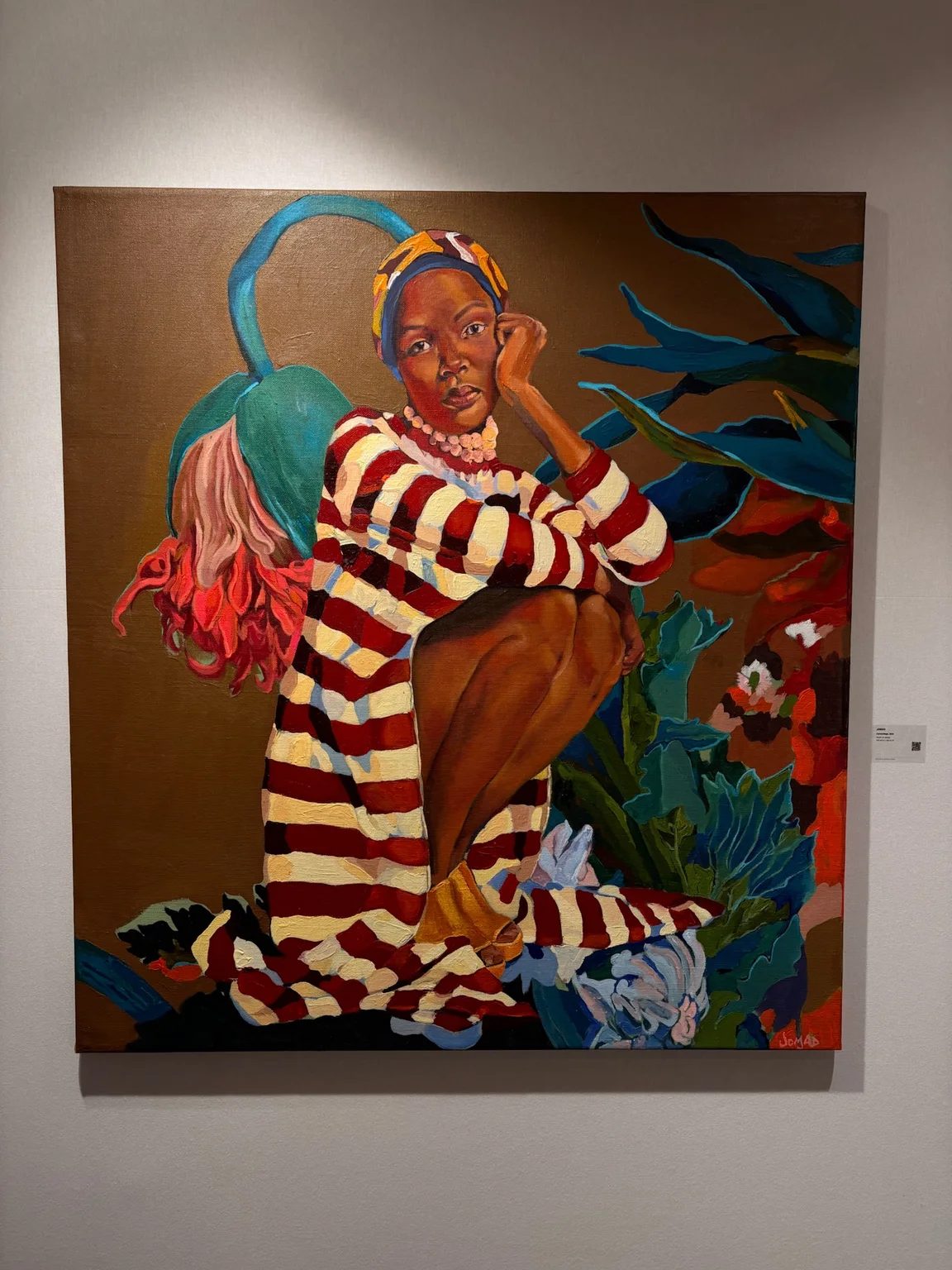
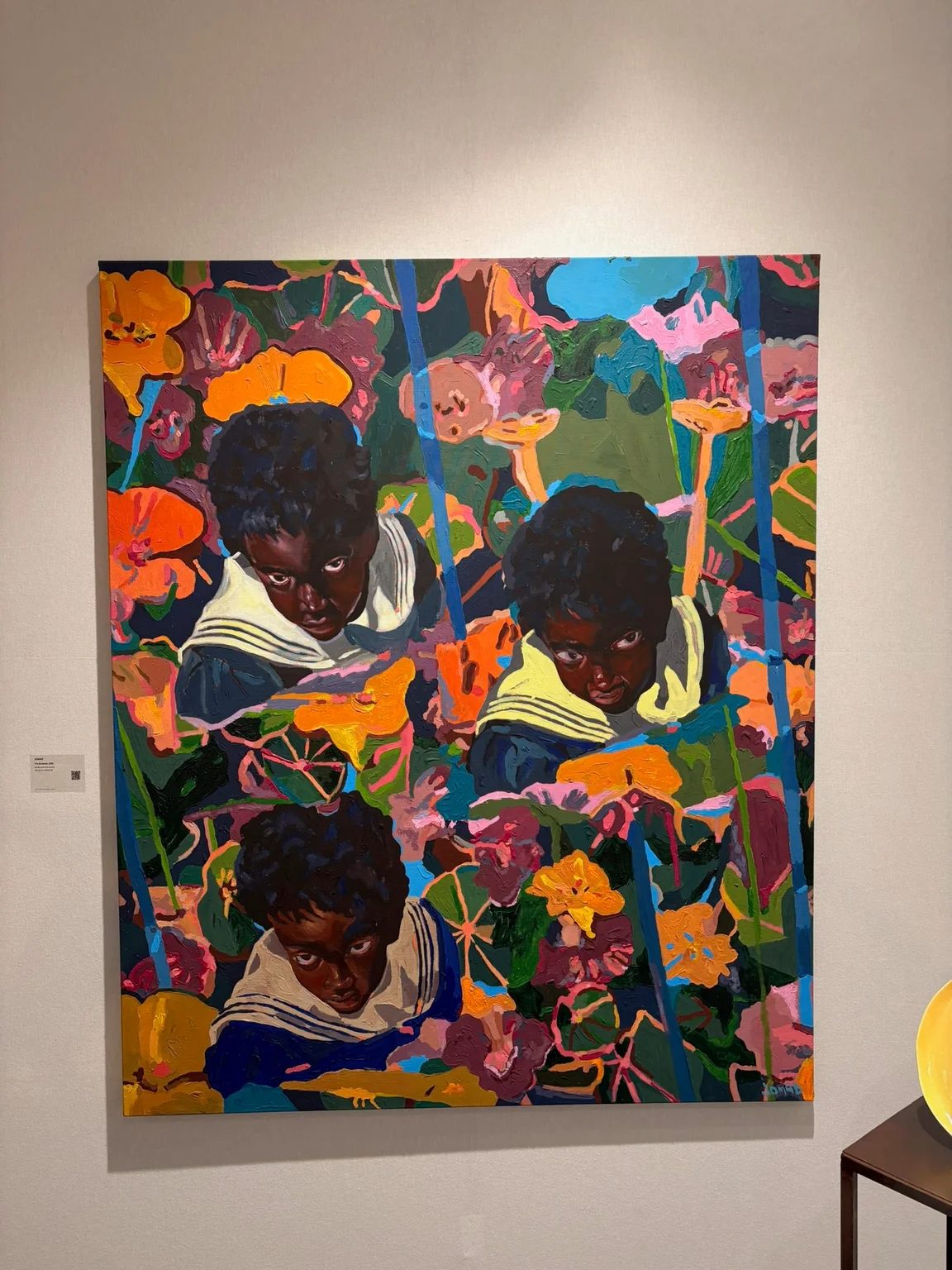
The works offer a meditative space in which to reconsider heritage, visibility and inner life, situating Jomad’s practice within broader conversations around contemporary African and diasporic art. Her masterful understanding of colour and composition gives the figurative subjects a magical, dreamlike quality, making it difficult to walk past the works without stopping to look a little longer.