An art condition report is a detailed document that records the physical state of an artwork at a specific time, including damage, materials, and structure. It is used by collectors, insurers, and conservators to track condition, support insurance claims, and verify the state of a work before and after transit, treatment, or sale.
Condition reports are standard practice in galleries, museums, and auction houses. They are less commonly used by private collectors, but for the same reasons they matter institutionally, they matter for anyone who owns art of value.
What is an art condition report?
An art condition report is a written record that describes the physical state of a work of art at a specific point in time. It documents what the work looks like, any existing damage or deterioration, and the materials and structure of the piece. For private collectors, a condition report serves as a baseline: evidence of how a work was when it entered your collection, which matters when you insure it, store it, move it, or eventually sell it.
The term is sometimes used interchangeably with artwork inspection report or art conservation report, though a conservation report more specifically documents treatment carried out by a conservator. A condition report, by contrast, describes the state of a work without necessarily involving any treatment.
What does an artwork condition report include?
A condition report for paintings, works on paper, or sculpture typically covers the following:
Identification
The artist, title, date, medium, and dimensions of the work. These confirm you are describing the correct piece and provide the basic record for any future reference.
Structural condition
For paintings, this means the state of the canvas or panel: any tears, holes, bulges, or areas of flaking paint. For works on paper, it covers foxing, tears, creases, or water damage. For sculpture, it addresses cracks, chips, repairs, or instability in the mount or base.
Surface condition
The state of the painted or finished surface: areas of abrasion, discolouration, yellowed or damaged varnish, inpainting from previous restoration, and any dirt or surface accretions.
Previous repairs or restoration
Any visible evidence of prior conservation treatment, including retouching, relining, or structural repairs. These are noted without judgment: prior treatment is not inherently a problem, but it is information a buyer, insurer, or conservator needs.
Frame condition
Where the work is framed, the condition of the frame itself, including any gilding loss, damage, or signs of woodworm. The frame is separate from the work but part of the overall record.
Photographic documentation
A condition report is typically accompanied by images: a full-face photograph, verso, details of the signature, and close-up images of any condition issues. Photographs are what make the written description useful: they show exactly what was present and where.
Art condition report example
What a condition report looks like in practice
A basic artwork condition report for a 20th century oil painting might read as follows:
Work: Oil on canvas, 80 x 60 cm. Signed lower right. Dated 1962.
Canvas and support: Canvas taut on stretcher. No tears or punctures. Minor age-related cupping in upper left quadrant.
Paint layer: Generally stable. Small area of active flaking, approximately 2 cm, at lower centre. Previous inpainting visible under raking light along left edge, consistent with minor historic damage.
Surface: Overall surface dirt. Varnish yellowed and uneven, more pronounced in lower third. No bloom.
Frame: Carved wood frame with gilt finish. Gilding loss at lower right corner, approximately 5 cm. Frame structurally sound.
Photographs: Full face, verso, raking light (left), detail of flaking area, detail of inpainting, signature.
This kind of record, made at acquisition, gives you a clear baseline. If the work is damaged later, you can demonstrate exactly what was pre-existing and what is new.
Art condition report vs art appraisal
What is the difference?
A condition report and an appraisal serve different purposes and should not be confused.
An artwork condition report describes the physical state of a work: what it looks like, any damage or deterioration, and the history of any prior treatment. It does not establish monetary value.
An art appraisal establishes the monetary value of a work for insurance, sale, or estate purposes. Appraisers note condition issues that bear on their estimate, but the primary output is a value figure, not a condition description.
For insurance purposes, you typically need both. The appraisal sets the insured value; the condition report provides the pre-loss baseline. For more on what insurers require from collectors, read art insurance for private collectors: costs, coverage, and how it works.
Why condition reports matter for private collectors
Insurance
This is the most immediate practical reason. When you insure a work, the insurer is agreeing to pay out if it is lost or damaged. If damage occurs, the claim depends on establishing what the work looked like before the loss. A condition report with photographs, made at the time of acquisition, is the clearest evidence you can have.
Without a pre-loss condition record, two problems arise. First, you may not be able to demonstrate what was pre-existing damage and what is new. Second, disputes about the extent of damage are harder to resolve. A well-documented condition record removes both issues.
Transit and loans
Works are most at risk when they move. A condition report made before a work leaves your possession, and another made when it returns, creates a clear record of any damage that occurred in transit. This is standard practice for institutional loans and should be standard practice any time a significant work leaves your home: to a framer, a conservator, a fair, or storage.
If a work comes back damaged and there is no condition record from before it left, the dispute about what happened and who is liable becomes significantly harder to resolve.
Acquisition
A condition report at the point of acquisition tells you exactly what you are buying. Auction catalogues note major condition issues but are not exhaustive. Gallery invoices rarely describe condition at all. If you are buying a significant work privately or at auction, commissioning an independent condition assessment before completing the purchase is reasonable due diligence, particularly for older works or works that have had prior restoration.
Sale and resale
Buyers of significant works increasingly expect condition documentation. A condition report held on file from the time of acquisition, updated after any treatment, supports the asking price and gives a buyer confidence. For works sold at auction, consigning with a full condition history helps the house write accurate catalogue notes and can support the reserve.
How to write an art condition report
A condition report does not need to be an expensive professional document. For most collectors, a thorough self-documented record is entirely sufficient: what matters is that the information is accurate, consistent, and stored somewhere you can find it.
The steps are straightforward:
- Record the basic identification details: artist, title, date, medium, dimensions.
- Examine the support and structure under good light, noting any damage, instability, or prior repair.
- Examine the surface, noting abrasion, discolouration, varnish condition, and any visible inpainting.
- Note the frame condition separately.
- Photograph the work: full face, verso, signature, and any condition issues in close-up.
- Store everything with the artwork record, not in a separate folder.
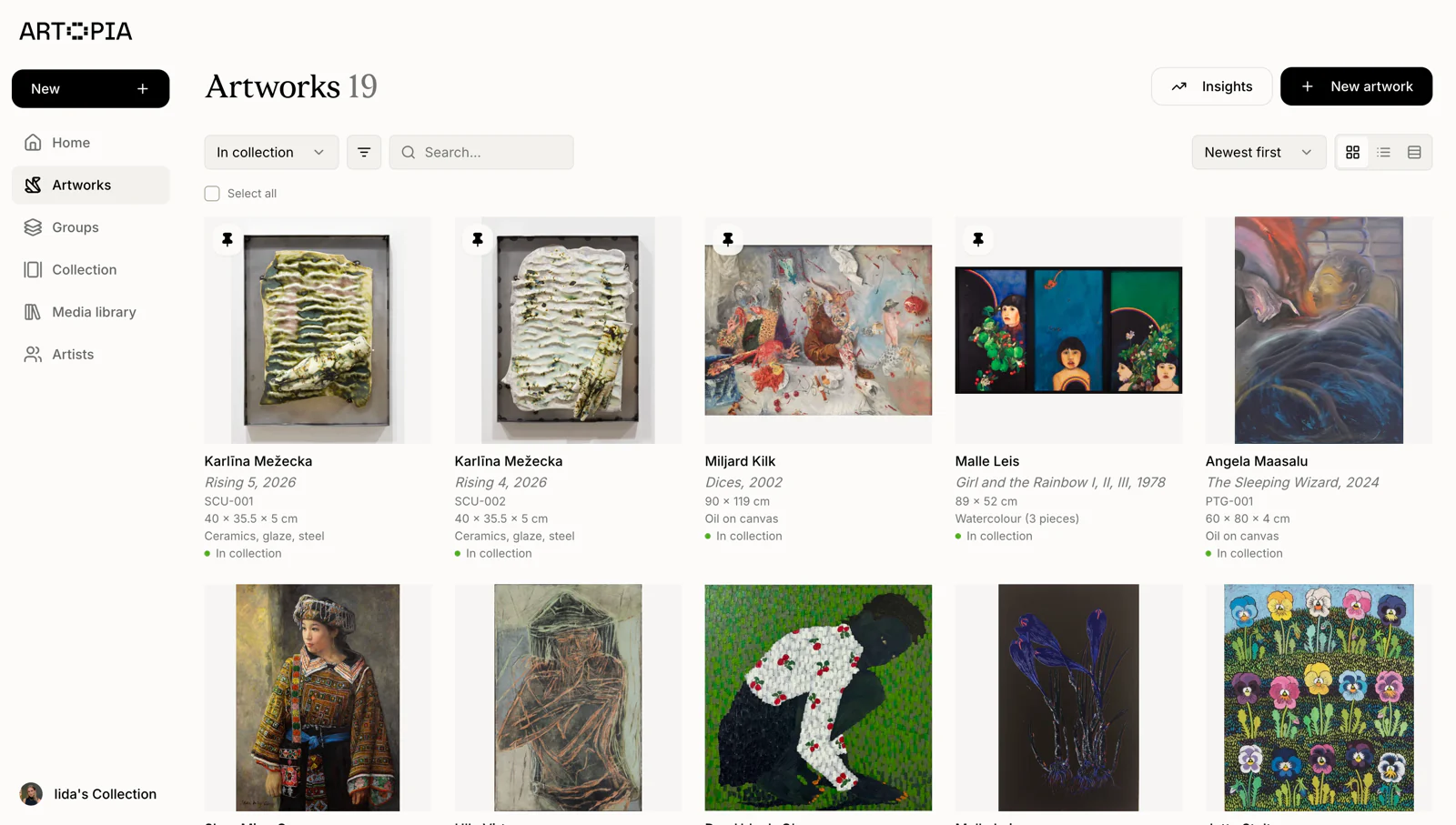
In Artopia, the condition report field is part of every artwork record alongside your images, acquisition details, and documents. Once you have filled it in, you can generate a PDF that includes the condition alongside the rest of the artwork's documentation, ready to send to an insurer, a buyer, or a conservator. Keeping your own condition records up to date in Artopia means you always have a professional-looking document available without commissioning one separately. Learn how to create artwork PDF reports in Artopia.
How often should you update a condition report?
A condition report is not a one-time document. It should be updated:
At acquisition. The starting record. Ideally made before or at the point of purchase.
Before and after transit. Any time a work is moved to a new location, sent to a framer or conservator, or loaned to an institution.
After conservation treatment. Treatment changes the condition of a work. A post-treatment report establishes the new baseline.
Periodically for stored works. Works in storage should be inspected at intervals, particularly if storage conditions are not purpose-built. Condition can change slowly in storage due to environmental factors, and catching problems early is always less costly than addressing them later.
When updating insurance. If you are having a work revalued for insurance purposes, it makes sense to assess condition at the same time. Condition affects value, and an insurer setting an agreed value wants current information on both.
Condition reports and collection documentation
A condition report is one part of a broader documentation practice. For each work in a collection, the complete record includes: acquisition documentation (invoice, provenance), photographic record, valuation history, and condition record. These are most useful when they are stored together rather than scattered across different files and folders.
Frequently asked questions
What is the difference between an art condition report and an appraisal?
A condition report describes the physical state of a work: what it looks like, any damage or deterioration, and the history of any prior treatment. An appraisal establishes the monetary value of a work for insurance, sale, or estate purposes. The two serve different functions, though condition affects value, and appraisers will note condition issues that bear on their estimate. For insurance purposes, you typically need both.
Do I need a professional conservator to write a condition report?
Not for most collectors, no. A condition report you write yourself, based on a careful examination of the work with photographs, is sufficient for insurance, resale, and general collection management. What matters is that the information is accurate and up to date. If you keep condition notes in Artopia and update them when something changes, you can generate a complete condition document as a PDF whenever you need one, without commissioning a separate report. For works with active structural problems or suspected damage, consulting a conservator is worthwhile, but that is about treatment, not documentation.
Can a condition report affect my insurance premium?
Not directly: condition reports do not typically change your premium. What they do is protect you when you make a claim. A pre-loss condition report with photographs is what allows an insurer to process a damage claim cleanly, and what prevents disputes about pre-existing damage. Read art insurance for private collectors for more on what insurers require.
Should I get a condition report when buying at auction?
Auction condition reports are prepared by house specialists and note major issues, but they are not exhaustive and are not independent. For any significant purchase, the most useful thing you can do is examine the work in person at a viewing before the sale, note its condition yourself, and photograph it. Once acquired, add that record to the artwork's entry in your collection so you have a baseline from day one.
How do I store condition reports for my collection?
With the artwork record, not separately. A condition report that lives in a different folder from the purchase invoice and provenance documents is less useful because you have to assemble the full picture under pressure when you need it. The most practical approach is to keep all documentation for each work together, either physically or digitally, attached to the artwork record rather than filed by document type.
Keep your condition records where you need them
Condition documentation is only useful if you can find it when it matters: before a work goes out on loan, when an insurer asks for evidence, or when a buyer wants to know what they are getting. Keeping it attached to the artwork record rather than in a separate folder is the difference between documentation that works and documentation that exists.
Artopia gives every artwork in your collection its own record, with fields for condition notes, acquisition details, valuation, provenance, and attached documents. When you need to share that documentation, you can export it as a formatted PDF in a few clicks. Start for free with Artopia.