To start an art collection, set a budget you can comfortably afford, explore artworks and artists that interest you, and research a work before buying it. Keep the invoice, photographs, and any supporting documents from your first acquisition, then build your collection at your own pace.
Starting an art collection is easier to overthink than to begin. You do not need a dealer, a budget you cannot afford, or a clear sense of what a collection is supposed to look like. What you need is a way in.
Collecting art means acquiring works you have a genuine connection to, building records for each piece, and developing your eye over time. It is not a single purchase. It is a practice. And it is more accessible than the art market tends to make it look.
This guide is for people buying art for the first time, or close to it. It offers a simple pattern that experienced collectors use, whether or not they name it. Find the work. Learn about it. Then buy.
Set a budget for your first artwork
Decide what you can comfortably spend before you start browsing. Include the full cost of bringing the work home: framing, delivery, installation, and any buyer’s premium or applicable taxes. Ask the seller for a total before committing. You can begin with one work and leave room for your interests to change.
The Find, Learn, Buy pattern
Most confident collectors follow a version of this pattern, even if unconsciously. Find work that interests you. Learn about the artist behind it. Buy when the connection feels right. It sounds obvious, but it changes the experience of collecting. You stop shopping and start paying attention.
Find: collect artists from your time
The most natural place to start is with artists who are working now. Not famous, not historical, not proven by auction records. Just alive, making work, showing it somewhere.
Follow what they are doing. Check their exhibition openings. Watch how their practice evolves over a year or two. Artists talk about their work on Instagram, through gallery newsletters, in interviews given to small publications that cover local scenes. All of this is available if you look.
This is not about discovering the next big name. It is about developing a real relationship with work you actually live with. That kind of familiarity is what makes a collection feel personal rather than assembled. If the artist is based in your region, ask for a studio visit or track where they are showing next. Seeing work in the place it was made changes how you understand it.
Find: look for dedicated emerging artist auctions
Auctions are not only for established collectors with deep pockets. Many platforms and auction houses run dedicated sales specifically for work by young and emerging artists, often with transparent pricing and the ability to bid from anywhere.
AucArt is one of the most focused examples: an online platform that works exclusively with emerging artists, often sourcing work directly from studios. Prices typically range from a few hundred to a few thousand pounds, and all works are vetted. It is a good place to start if you want the auction experience without the intimidation of a major house.
Artsy aggregates auctions from hundreds of houses and galleries worldwide, including many that focus on emerging work. You can filter by budget, medium, and geography, and bid on live and timed sales from one place.
Phillips runs a recurring series called New Now focused on emerging contemporary artists, with works that often sit at more accessible price points than their marquee evening sales.
If the whole thing still feels overwhelming, start locally first. Regional auction houses, museum fundraising sales, and graduate degree shows are all places where you can see work in person, talk to people who know the artists, and bid without competing with an international pool of buyers. Being in the room matters. You notice things about scale, surface, and materiality that no photograph captures.
Learn: research the artist, not just the work
Before you buy anything, spend time on the artist. What are they making now, and how does it relate to what they made two years ago? Where have they shown? What do they say about their own practice?
This is not about building a dossier. It is about understanding whether your interest in the work holds up once you know more. Some pieces are exciting in the room and thin at a distance. Others get richer the longer you think about them. Research is what tells you which you are looking at.
Good places to look: gallery websites, artist statements, reviews in art publications, and the artist's own social media. For auction history on artists who have been on the market for a few years, Artnet and Artprice maintain searchable records.
A few questions worth asking before you commit: Has the artist shown in group or institutional exhibitions, or only commercially? Is there a gallery representing them, and how established is that gallery? Have any works appeared at auction, and if so, how did they perform? None of these are reasons to buy or not buy. They are context. The more context you have, the more confident your decision will be.
Check the artwork before you buy
Ask the artist, gallery, or auction house to confirm the title, date, medium, dimensions, and condition. For an edition, check the edition size and number. Ask what is known about previous ownership and what documentation comes with the work, such as an invoice or a certificate where available. Request clear photographs and read the payment, delivery, and return terms before you agree.
Buy: look for editioned works
If you want to start buying before you are ready to commit to a significant original work, editions are the obvious place. Prints are the most common entry point: limited runs, signed and numbered, made by artists whose original paintings and sculptures sell for multiples of the print price.
But prints are not the only option. Many sculptors edition their work too. Small bronze or resin runs of five or ten pieces, each signed and certified, made by artists with serious institutional exhibition histories. The edition does not diminish the work. It extends access to it.
Editions let you live with an artist's thinking before you are ready to invest in their larger practice. And if your taste evolves, they are easier to pass on.
Keeping track of what you collect
Once you start buying art, even slowly, the practical side of collecting becomes real. Where did you buy it? What documentation came with it? What did you pay, and when?
Most collectors start with a spreadsheet and outgrow it quickly. Digital files get lost, images are stored in different places, certificates of authenticity go missing. The earlier you build a proper record for each work in your art collection, the easier everything becomes later: insurance, loans, resale, estate planning. If you are weighing up whether a spreadsheet is enough, this comparison covers the tradeoffs honestly.
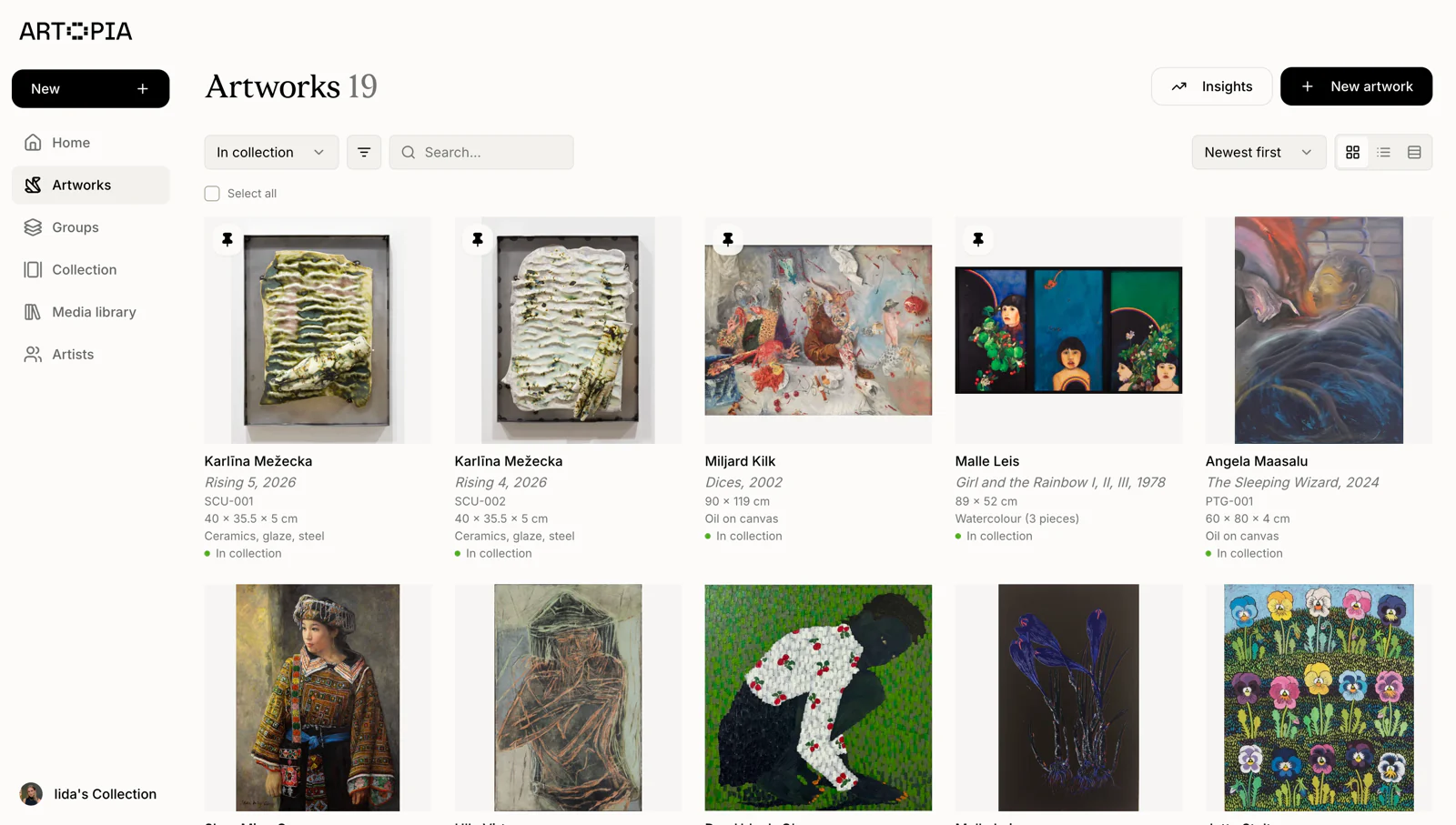
Artopia is built for exactly this. Each artwork gets its own record with images, purchase details, provenance, and documents. Your collection stays private by default, but you can share selected works with anyone you choose. Your data is always yours and exportable whenever you need it.
Start for free at art-opia.com
Still wondering whether the label fits? Read what is an art collector to understand what collecting can mean for you.