An art collector is someone who intentionally acquires and keeps artworks, often guided by personal taste, an interest in particular artists, or a collecting focus. Collectors can buy, commission, inherit, or receive art as gifts. A collection can begin small and develop over time.
You don’t need a large budget or famous names to begin. If you choose and keep art because it matters to you, you may already think and act like a collector.
If you've ever said "I wouldn't call myself a collector" while standing in a room full of art you chose, you're not alone.
We hear it all the time. And it usually comes from the same assumption: that collecting is something you graduate into, rather than something you're already doing.
Collecting doesn't start at a certain number, price point, or level of recognition. It starts the moment you choose to bring art into your life intentionally.
There's no minimum number
There isn't a point where art ownership suddenly becomes collecting. No magic number. No checklist you unlock.
If you've bought art intentionally, not to fill space but because you wanted that work, you're already doing it. Collecting isn't about scale. It's about choice.
And you're far from alone in starting. According to the Art Basel & UBS Art Market Report, 44% of gallery clients in 2024 were new to the galleries they bought from, and sales to first-time buyers rose to 38%, up 5 points from the year before. The market is full of people at the beginning of their collecting journey.
Every time you decide what earns a place on your wall, you're shaping a collection. Even if it's small and evolving.
Your art collection doesn't need famous names
A lot of people assume a "real" collection needs recognisable artists or market validation. But that version of collecting is more about reassurance than engagement.
The data backs this up: Artsy's Art Market Trends 2025 report found that 72% of collectors are drawn to emerging artists, slightly more than the 69% drawn to established names. Some of the most compelling collections are built around unexpected discoveries and work that simply resonated at the right moment. Choosing based on connection rather than reputation isn't a shortcut. It's the point.
Over time, those choices form a point of view. And that's what makes a collection interesting.
You don't need permission to be an art collector
There's no official moment when someone becomes a collector. No authority handing out titles.
If you've bought a print, commissioned a piece, supported an artist directly, or built a small group of works you care about, you're already participating. The hesitation to claim the label usually has less to do with eligibility and more to do with confidence.
The Art Basel & UBS Survey of Global Collecting 2025 found that younger buyers are motivated by meaning as much as by market value. Collecting has become a way to express identity rather than simply a measure of wealth. If that resonates with why you buy art, you already belong.
Collecting doesn't require approval. It just requires showing up.
Taste is built, not declared
One of the benefits of thinking of yourself as a collector is that it changes how you relate to your own taste. You stop second-guessing and start noticing patterns: what you return to, what stays with you, what you're willing to live with over time.
Taste isn't something you announce. It's something you build, piece by piece, by paying attention.
That process is what turns individual works into a collection.
What does an art collector do?
Collectors choose works they want to live with and learn about the artists who made them. Some follow a particular medium, period, or theme; others let their interests develop with each acquisition.
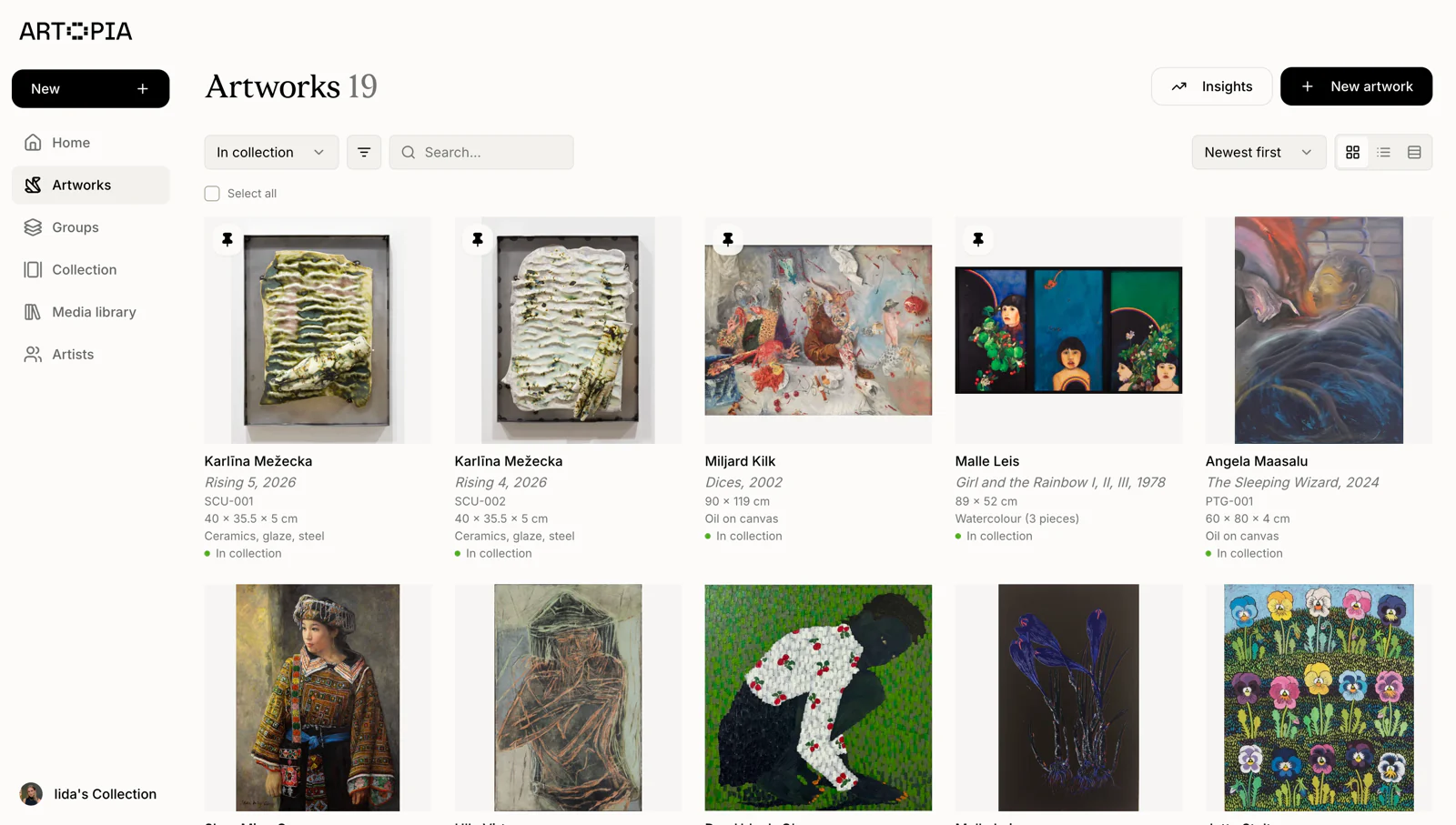
They also keep a record of what they own: the artist, title, date, medium, dimensions, acquisition details, and ownership history, or provenance. Invoices, certificates, photographs, and correspondence help preserve the context of each work.
Caring for a collection means checking condition, choosing suitable display and storage, and keeping track of where each artwork is. Those habits can begin with your first piece.
If you’re ready to make your first purchase, read our guide to how to start an art collection.
Call it what it is
Language matters. When you stop downplaying your relationship to art, you begin to approach it more deliberately. Not to perform expertise, but because you've acknowledged that your choices add up.
The tools to collect are more accessible than ever. Artsy's report found that 59% of collectors purchased art online in 2024, with 73% of those buying as much or more than the previous year. What's been missing isn't access. It's a home for what you've already built.
If you own art and chose it with care, you don't need to hedge.
You're an art collector.
And once you start seeing yourself that way, it makes sense to treat your collection accordingly. To document it, keep track of it, and give it a place that reflects its value to you.
That's what Artopia is for: a digital home for your collection, built on your terms. Read more about getting started with Artopia here
Sources